Research on the Application of VAE Polymer Emulsion in Waterproof Materials

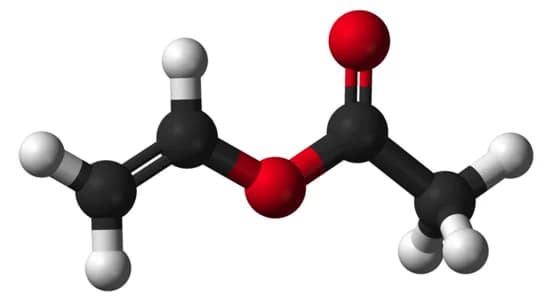
VAE polymer emulsion is a copolymer emulsion of vinyl acetate and ethylene. Due to the introduction of the comonomer ethylene, its internal plasticity is significantly improved. Therefore, VAE polymer emulsion has good film-forming properties, low film-forming temperature, soft and strong coating, and wear resistance, thus significantly improving the water resistance, alkali resistance, weather resistance and stain resistance of the coating. Choosing a VAE Emulsion (Vinyl Acetate–ethylene Copolymer Emulsion) with a lower viscosity can accommodate a large amount of filler while maintaining excellent adhesion to various substrates. This unique property makes it very suitable for adhesive materials where filler is used to control the bonding strength and cost.


1. Preparation of Waterproof Coatings

According to the technical requirements of the construction site, appropriate additives such as stabilizers, dispersants, and defoamers are added to the VAE emulsion. At the same time, some powders such as cement, calcium carbonate, and quartz powder are selected to design a variety of waterproof coatings that meet various technical requirements.

1.1 JS Waterproof Coating

Two-component water-based JS waterproof coatings, primarily composed of polymer emulsion and cement, come in two types: one uses cement entirely as filler, and the other uses a mixture of cement and other powders as filler. Both types of JS waterproof coatings form their films mainly through cement hydration and polymer particle dehydration and fusion. However, due to the difference in fillers, their film properties differ. Designing a formulation that meets both standards and engineering requirements generally uses the polymer-to-cement ratio (P/C) as the main parameter. Based on years of experimental experience, this paper discusses the formulation using aluminate cement and VAE emulsion as an example, using data and charts. Figure 1 shows the elongation at break of the coating with cement as the sole filler, as a function of P/C; Figure 2 shows the elongation at break of the coating with a mixture of cement and quartz powder as filler, as a function of P/C. Both coatings meet the tensile strength requirements of JC/T 894—2001 standard.

According to JC/T 894—2001, the range of design parameter P/C values ​​that meet the performance index requirements of Type I and Type II JS waterproof coatings can be found in Figures 1 and 2, summarized in Table 1.

Table 1. Design Parameters of JS Waterproof Coating P/C Value Range
Filler Type Type I JS Waterproof Coating Type II JS Waterproof Coating
Cement 1.9-2.8 1.1-2.1
Cement + Quartz Powder 1.8-2.6 1.5-1.8


For JS waterproof coatings made entirely of cement, P/C can be considered as a design parameter. However, for JS waterproof coatings made by mixing cement and other fillers, in addition to P/C, the design parameters should also consider the polymer-to-powder ratio (P/F, the ratio of polymer mass to the total mass of powder) and the cement-to-powder ratio (C/F, the ratio of cement mass to the mass of other powders). The effects of P/F and C/F on the elongation at break of waterproof coatings with partial cement filler are shown in Figures 3 and 4, respectively.

Comparing Figures 3 and 4 with Figure 2, the effects of P/F and C/F on the elongation at break are clearly visible. Increasing the P/F value increases the elongation, while increasing the C/F value decreases the elongation. The abrupt change points on the P/F, C/F, and P/C curves are basically corresponding. Therefore, when designing JS waterproof coatings, it is necessary to comprehensively consider these parameters to obtain the optimal mixing ratio. In engineering applications, the following aspects need attention:

(1) When treating fine cracks and reinforcing layers, adding one layer of fiberglass cloth to the coating film can greatly improve the tensile strength of the film. Experiments show that, under the same raw material parameters, adding one layer of fiberglass cloth can increase the tensile strength of the coating film by 471%, while reducing the elongation at break by 99%.

(2) When it is necessary to increase the elongation at break of the coating film, an appropriate amount of plasticizer can be added, but this will result in a loss of tensile strength. For example, using the same formula, adding 12% plasticizer increases the elongation at break of the coating film by 93%, but reduces the tensile strength by 69%.

(3) When using cement to prepare JS waterproof coatings, adjusting the formula with P/C generally follows that as P/C increases, the tensile strength of the coating film decreases, while the elongation at break increases. However, this pattern applies within a certain P/C value range, and the P/C value range varies among different types of cement. Therefore, it needs to be determined through testing in application.

(4) The situation regarding the preparation of JS waterproof coatings using mixed powders is relatively complex. Analysis of the data in Table 2 shows that when P/F is the same, the tensile strength and elongation at break of the coating film are not significantly different; however, when P/C is the same but P/F is different, the coating film performance also differs.

Table 2. Effects of P/C and P/F on Waterproof Coating Performance
P/C P/F Tensile Strength / MPa Elongation at Break / %
2.6 1.0 4.2 232
2.1 1.0 4.1 171
1.8 1.0 4.1 211
1.5 1.0 4.1 196
1.5 0.9 3.3 257
1.5 0.8 3.6 133
1.5 0.7 3.7 67
1.5 0.5 4.7 43

(5) When different types of cement are used with VAE emulsion to prepare waterproof coatings, even with the same mixing parameters, the differences in coating film performance are still significant. This should be given particular attention in engineering applications to avoid unnecessary losses.

1.2 Polymer Emulsion Waterproof Coatings

Using VAE emulsion as the main raw material, single-component water-emulsion type waterproof coatings can also be prepared. If colored pigments are added, the coating film, in addition to its waterproof function, also has the function of beautifying the environment. Formulation design and performance tests show that using VAE emulsion in combination with other emulsions effectively improves the tensile strength and elongation at break of the coating film, achieving better results than using VAE emulsion alone (such as VINAVIL EVA 2606L) .

with the same polymer-to-powder ratio (P/F), the composite emulsion waterproof coating exhibits superior performance. All indicators are more reasonable and meet the requirements of JC/T 864—2000 "Polymer Emulsion Waterproof Coatings for Buildings" standard. It should be noted that only one formulation ratio should be used in various projects; instead, the types and quantities of emulsion and powder should be adjusted according to the actual application areas to ensure the waterproof coating performance meets the requirements of different projects.


2. Preparation of Mortar Waterproofing Agents

Rigid waterproofing started with the five-layer plastering method, gradually progressing to the use of admixtures to modify cement mortar or concrete, and now to polymer-modified cement mortar. Compared with ordinary cement mortar, polymer-modified cement mortar has many superior properties, including strong adhesion, high elasticity, impact resistance, good waterproofing, and improved chemical resistance. The high bonding strength of VAE emulsion makes it very suitable for use in modified cement mortar.

When preparing waterproofing agents for cement mortar using VAE emulsion as the main material, it is important to note that: due to the large amount of calcium and magnesium ions in cement absorbing water from the emulsion, and the mechanical shearing action during mixing, the polymer emulsion may break down. To improve the stability of the emulsion, an appropriate amount of stabilizer should be added.

Experimental materials: self-made VAE waterproofing agent; cement, P·O 42.5 grade; sand, ISO standard sand.

Experimental mix ratio: m(cement):m(sand):m(VAE waterproofing agent) = 1:3:(0.47~0.52).

Experimental items: conducted according to JC/T 474—1999 "Waterproofing Agents for Mortar and Concrete", with particular attention to the change in water absorption over 48 hours (see Figure 5). The dosage of waterproofing agent in the mortar is expressed as the polymer-cement ratio P/C of the mortar.

As shown in Figure 5, the water absorption of VAE mortar decreases rapidly when P/C = 0.15~0.19, and then the rate of decrease slows down as the P/C value increases.

Performance testing was conducted on VAE mortar with a P/C value of 0.2, and the results are shown in Table 4.

Table 4 Main performance indicators of VAE mortar
7-day compressive strength ratio % 28-day compressive strength ratio % Water permeability ratio 1% 48-hour water absorption ratio % 28-day shrinkage ratio %
143 136 375 9 107

Characteristics of VAE waterproofing agent applied to cement (mortar):

(1) Water reduction rate can reach over 30%, thus increasing mortar density, reducing and uniformly distributing internal voids, and increasing compressive strength.

(2) Significantly reduced water absorption and excellent waterproofing properties, making it very suitable for constructing water storage tanks, underground projects, roofs, and other waterproofing facilities.

(3) When VAE waterproofing agent is mixed with mortar, the workability of the mortar is good, the water retention is improved, and bleeding is effectively prevented.

(4) Cement (mortar) mixed with VAE waterproofing agent has high bonding strength and can be used as a binder for various building materials.

(5) In engineering practice, cement (mortar) modified with VAE waterproofing agent exhibits excellent anti-seepage and waterproofing performance. Whether used as a waterproofing finishing material on the water-facing or backwater side of water-retaining structures, or for repairing leaking rigid waterproofing layers, VAE waterproofing agent has been rapidly promoted and applied due to its suitability for construction on damp substrates.


3 Conclusion

Years of research and application have proven that VAE emulsion (such as VINNAPAS EP 4600) used in polymer-modified cement (mortar) products exhibits unique properties, possessing both high bonding strength and tensile strength, as well as good elongation. This performance is crucial for polymer-modified cement (mortar) products. VAE emulsion-modified cement (mortar) has broad practical value in concrete repair, protection, waterproofing, corrosion prevention, and bonding.


Website: www.elephchem.com

Whatsapp: (+)86 13851435272

E-mail: admin@elephchem.com

Top

SoarnoL DC3203RB Technical Analysis

SoarnoL DC3203RB combines the high gas barrier properties, oil resistance, and transparency of ethylene alcohol with the moisture resistance and melt extrusion processability of ethylene. Furthermore, since Soarnol is composed only of carbon, oxygen, and hydrogen, it does not produce toxic gases when burned, and the heat generated during combustion is only half that of polyethylene, making it a low-load raw material.


SoarnoL DC3203RB (EVOH EW-3201) Performance Characteristics:

Excellent Gas Barrier Properties: It provides excellent barrier properties against gases such as oxygen and carbon dioxide, effectively preventing food and pharmaceuticals from spoiling or developing off-flavors due to oxygen penetration, thus extending the product's shelf life. For example, in food packaging, packaging containing this material can extend the shelf life and aroma retention of food by months or even years without the addition of preservatives.

Excellent processing performance: Combining the processability of ethylene polymers with the barrier properties of vinyl alcohol polymers, it can be thermoformed using traditional polyolefin processing equipment, such as extrusion, blow molding, and injection molding, easily producing various packaging containers, films, and other products.

Excellent oil and organic solvent resistance: Exhibits strong stability when in contact with oils and various organic solvents, with minimal weight gain and is not easily dissolved or swollen, making it suitable for packaging oily foods, cosmetics, pharmaceuticals, and products containing chemical solvents.

High mechanical strength and good abrasion resistance: Possesses high tensile strength, flexural strength, and impact strength, along with high surface hardness and good abrasion resistance. Packaging materials made from this material are not easily damaged during transportation, storage, and use, protecting the integrity of the contents.

Good transparency and gloss: Film products have high gloss and low haze, and are highly transparent, allowing the product inside the packaging to be clearly seen, enhancing the product's display effect and attracting consumers.

Good thermal stability: It is one of the most thermally stable resins among all commercially available strong barrier resins. Waste generated during processing can be recycled and reused, reducing production costs and meeting environmental protection requirements.

Meets environmental protection requirements: It is non-toxic and odorless, and will not produce harmful substances upon direct contact with food, medicine, etc., making it safe for human health and the environment. Furthermore, multi-layer packaging materials containing Soarnol EVOH (Ethylene-VinylAlcohol Copolymer) can be recycled under certain conditions, helping to reduce waste pollution.


SoarnoL DC3203RB package


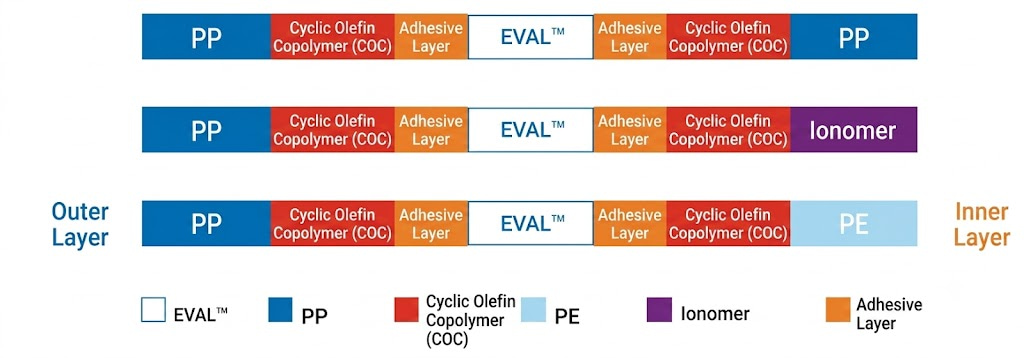
When used as a high-barrier material, EVOH is typically employed in a multi-layer composite structure. Typical structures include:

Low-density polyethylene/ethylene-vinyl alcohol copolymer/low-density polyethylene

PP/AD/EVOH/AD/LDPE

PP/PA/EVOH/PA/AD/PE

PE/AD/PA/EVOH/PA/AD/PE

PA/EVOH/PA/AD/PE


In these structures, AD represents the adhesive. The multi-layer composite structure fully utilizes the properties of each material, improving the water resistance of EVOH and resulting in a high-barrier material with excellent overall performance. Most of the above structures are used in flexible packaging. Composite resins such as PP, PE, and PA, due to their good toughness but poor rigidity, are difficult to cut, limiting their application in rigid packaging, especially in online filling products. Impact-resistant high-barrier polystyrene (HIPS) possesses good rigidity, excellent molding performance, and is easy to punch, making it suitable for rigid packaging materials.


However, due to the poor compatibility between EVOH resin and HIPS resin, and the significant difference in their rheological rates, key issues affecting the performance and use of the composite material include the adhesion strength between the substrate and EVOH, the tensile properties of EVOH during secondary molding, and the uniformity of EVOH layer distribution during calendering of composite sheets. These are also challenges that need to be addressed in the production of this type of composite material. Domestic production has been difficult, necessitating imports, which significantly restricts cost and delivery time. Therefore, the development of high-barrier EVOH composite materials suitable for rigid packaging, especially for online filling, is particularly urgent.


Website: www.elephchem.com

whatsapp: (+)86 13851435272

E-mail: admin@elephchem.com
Top

What does PVB mean in laminated glass?

1. Overview of PVB in Laminated Glass

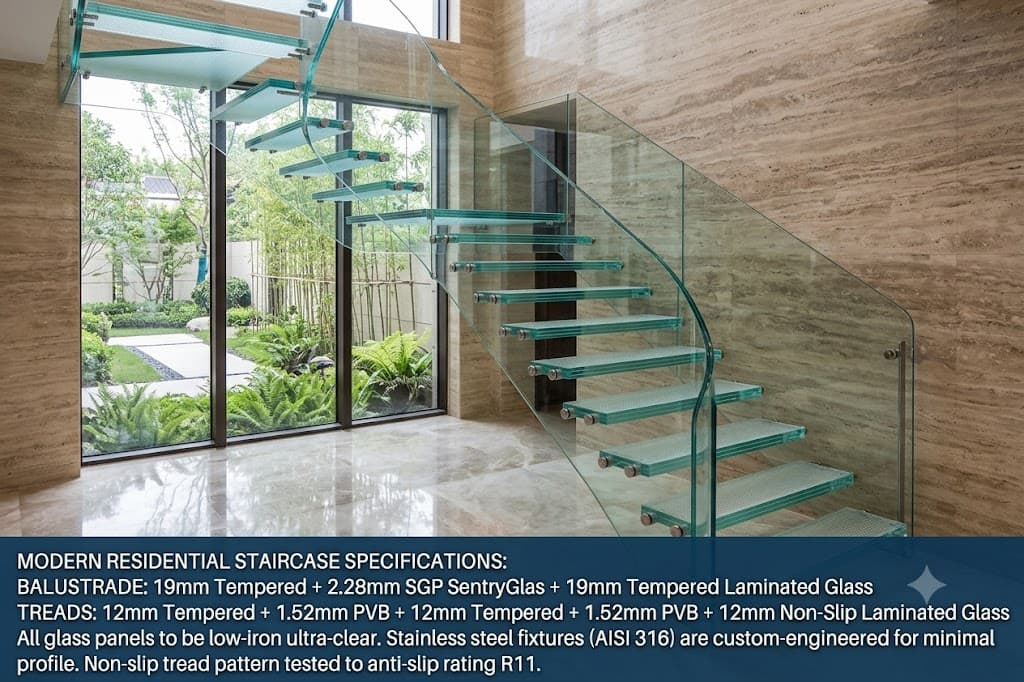
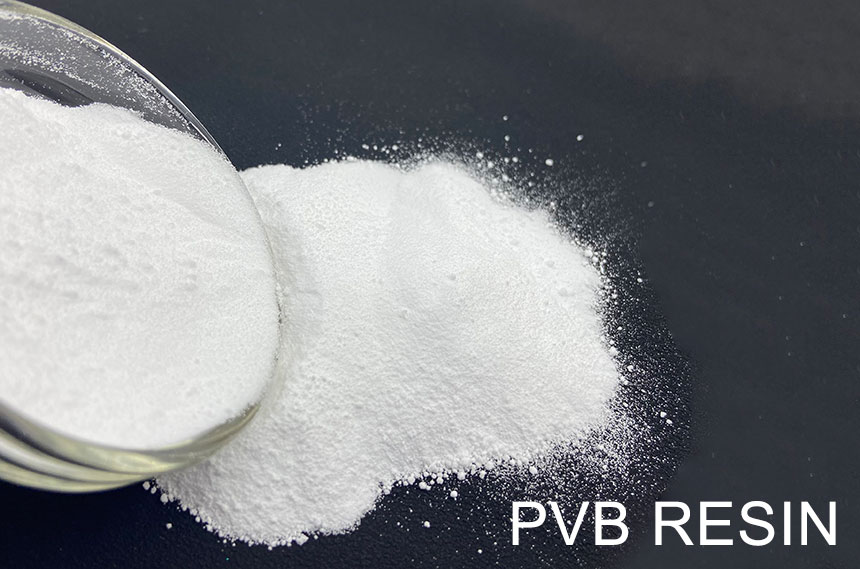
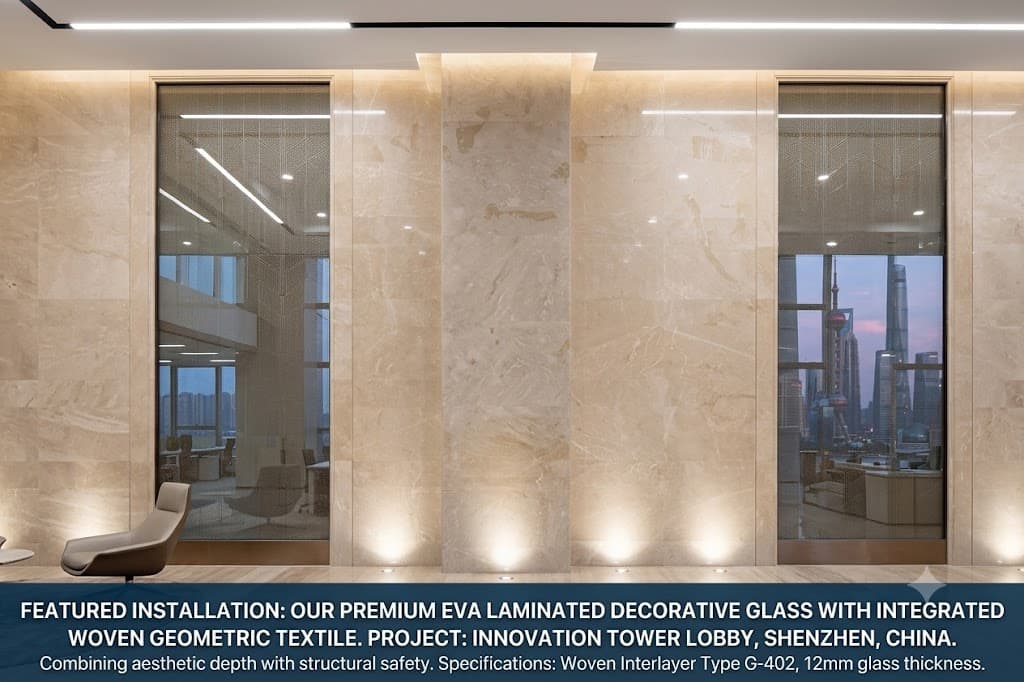
PVB (polyvinyl butyral resin), is a high-performance resin material widely used in the production of laminated glass. PVB is produced through an alcoholysis and acetalization reaction, possessing excellent adhesion, transparency, and elasticity. It bonds tightly to glass, giving laminated glass superior safety, sound insulation, and UV resistance.


2. Production Process of PVB in Laminated Glass

The production process of laminated glass mainly includes the following steps:

Glass Cleaning: First, clean the two or more pieces of glass to be laminated to ensure the glass surface is clean and flawless.

PolyVinyl Butyral Film(PVB film) Processing: Cut PVB film to the appropriate size and color according to the required dimensions and color of the laminated glass.

Lamination Processing: Place the PVB film between two or more pieces of glass and undergo a high-temperature, high-pressure lamination process to bond the PVB film tightly to the glass, forming laminated glass.

Inspection and Packaging: Quality inspection is performed on the produced laminated glass. Qualified products are packaged for transportation and sale.


3. Advantages and Applications of PVB Laminated Glass

Laminated glass, due to the use of China PVB film, has the following advantages:

  • High Safety: When laminated glass breaks due to impact, fragments adhere to the PVB film, reducing injury and improving safety.
  • Good Sound Insulation: The PVB film has excellent sound insulation properties, making laminated glass perform exceptionally well in noise reduction, especially suitable for applications requiring noise reduction.
  • UV Protection: The PVB film effectively blocks most ultraviolet rays, protecting indoor items from UV damage and extending their lifespan.

Laminated PVB glass is widely used in the following fields:

  • Construction Industry: Due to its safety, sound insulation, and UV protection properties, laminated glass is widely used in building curtain walls, sunrooms, doors and windows, stairs, railings, etc.
  • Automotive Industry: Laminated glass is commonly used for automobile windshields to improve the safety and comfort of drivers and passengers.
  • Transportation Facilities: Laminated glass is commonly used in transportation facilities such as train stations, airports, and bus stops for applications like glass curtain walls and sound barriers.
  • Security: Laminated glass can be used in bulletproof, explosion-proof, and burglarproof security systems to protect personal safety and property.


4. Classification and Selection of PVB Laminated Glass

Based on the thickness, color, and performance of the PVB film, laminated glass can be classified as follows:

Ordinary Laminated Glass: Uses ordinary transparent PVB film, suitable for general construction, furniture, and other fields.

Colored Laminated Glass: Uses colored PVB film, offering a wide range of color choices, suitable for decorative applications.

Soundproof Laminated Glass: Uses PVB film with special soundproofing properties, suitable for environments requiring noise reduction.

When selecting laminated glass, consider the thickness, color, and performance of the PVB film based on your actual needs and budget to choose the appropriate product.


5. Installation and Maintenance of Laminated PVB Glass

To ensure the performance and lifespan of laminated glass, the following installation and maintenance precautions should be taken:

Installation: Laminated glass should be installed by professionals to ensure a secure installation, good sealing performance, and to prevent water and air leakage.

Cleaning: Use a neutral detergent to clean laminated glass. Avoid using acidic, alkaline, or abrasive cleaners to prevent damage to the PVB film and glass surface. Use a soft cloth or sponge for cleaning; avoid using hard brushes or metal brushes.

Sun Protection: Although laminated glass has some UV resistance, prolonged exposure to strong sunlight may cause the PVB film to age and discolor. Therefore, in locations where laminated glass is used, consider implementing sunshades or shading measures to extend its lifespan.

Moisture Prevention: Laminated glass is susceptible to moisture in humid environments, affecting its sealing performance and transparency. Therefore, when using laminated glass in high-humidity environments, pay attention to ventilation and moisture prevention.


6. Development Prospects of PVB Laminated Glass

With continuous technological advancements and rising demands for quality of life, laminated glass will be increasingly widely used in construction, transportation, and security. The future development trends of PVB laminated glass mainly focus on the following aspects:

Enhanced Functionality: Developing PVB films with multiple functions such as higher safety performance, better sound insulation, and stronger UV resistance to meet the needs of various scenarios.


In summary, as a high-performance resin material, PVB laminated glass has broad application prospects in construction, transportation, and security due to its excellent safety performance, sound insulation, and UV resistance. When selecting and using laminated glass, the appropriate PVB film type should be chosen according to actual needs to ensure the effectiveness and lifespan of the laminated glass.


Website: www.elephchem.com

Whatsapp: (+)86 13851435272

E-mail: admin@elephchem.com

Top

Why do high-end tissue paper products place higher demands on PVOH?

With the continued growth in demand for high-end tissue paper, tissue products are no longer solely focused on absorbency, but also require higher standards for softness, strength, surface structure, and operational stability. To meet these demands, paper machine technology is constantly being upgraded, and various structured tissue paper processes are being widely adopted. Against this backdrop, the stability and performance boundaries of the Yankee Coating formulation system have been significantly amplified, and PVOH (Polyvinyl Alcohol) is becoming one of the key materials determining coating performance.


1. What New Challenges Does the Upgraded Tissue Paper Processing Present to Yankee Coating?

Traditional dry creping processes have relatively mild requirements for coatings, while the new generation of structured tissue paper processes places more complex demands on coatings during the forming and peeling stages, mainly in three aspects.

First, higher adhesion stability. Under high-speed operating conditions, the residence time of the paper sheet on the Yankee drying cylinder surface is shortened, requiring the coating to form a stable and continuous functional film layer in a shorter time to avoid localized delamination or uneven adhesion.

Second, stronger shear resistance. High linear speeds and more frequent doctor blade action expose coating materials to a prolonged high-shear environment, making low-molecular-weight or structurally unstable PVOH prone to performance degradation.

Thirdly, the operating window narrows. High-end paper machines are more sensitive to coating dosage, concentration, and viscosity control; fluctuations can easily affect paper web peeling, energy consumption, and paper quality.

These changes mean that the molecular structure of PVOH is no longer merely a matter of "usability," but has become a core variable for system stability.

pva package

2. How PVOH Molecular Weight and Viscosity Affect Coating Film Formation and Peeling Performance

PVOH is essentially a linear polymer, and its molecular weight directly determines solution viscosity, film strength, and cohesiveness. In Yankee Coating applications, high-molecular-weight PVOH often exhibits the following advantages:

First, better film continuity. Enhanced entanglement between polymer chains makes it easier for the coating to form a uniform, dense film on the drying cylinder surface, reducing microcracks and localized defects.

Second, a more controllable balance between adhesion and release. Appropriately increasing the molecular weight and system viscosity can improve wrinkling structure by ensuring stable paper adhesion and enabling predictable peeling behavior through the doctor blade.

Third, it offers stronger resistance to dilution and shearing. In actual operation, the coating is affected by multiple factors such as moisture, temperature, and mechanical shearing; the performance degradation rate of high molecular weight PVOH is significantly slower.

It is important to note that higher molecular weight is not always better. Excessively high viscosity may lead to difficulties in dissolution, increased pumping pressure, and slower system response; therefore, a balanced design must be implemented based on equipment conditions.


3. The Practical Value of High-Viscosity PVOH in High-End Tissue Paper

From operational practice, high-viscosity, high-molecular-weight PVOH demonstrates three main values ​​in the production of high-end tissue paper.

First, it improves the stability of paper machine operation. A stable coating film reduces the need for frequent adjustments to the formulation and doctor blade pressure, facilitating long-term continuous operation.

Second, it reduces unit consumption. Due to higher film-forming efficiency, the coating amount can be appropriately reduced to achieve the same adhesion effect, thereby reducing overall chemical consumption.

Third, it improves paper consistency. Reduced coating performance fluctuations result in more stable feel, strength, and surface structure of the finished paper, mitigating batch-to-batch variation risks.

For high-end tissue paper production lines, PVOH is no longer merely an auxiliary chemical, but a key material affecting product quality and operational efficiency.


4. Technological Innovation of Kuraray Poval 200-88 KX

The unique feature of Kuraray Poval 200-88 KX lies in its branched structure. Ordinary PVOH is mostly a linear polymer, and its increased viscosity often leads to decreased operability. However, 200-88 KX boasts a viscosity of 200 mPa·s at a 4% concentration, far exceeding traditional models (such as Kuraray Poval 22-88 22 mPa·s).

This high molecular weight and unique branched design deliver significant performance advantages:

Wider operating window: Adapts to variations in temperature and humidity.

Excellent shear-thinning behavior: Maintains good flowability during high-speed spraying, yet rapidly forms a film upon contact with the drying cylinder.

Increased productivity: Improved paper gripping on the Yankee cylinder significantly enhanced the paper machine's performance and reduced paper breakage.


Website: www.elephchem.com

Whatsapp: (+)86 13851435272

E-mail: admin@elephchem.com
Top

How Air Shower Build the First Line of Defense for Food Safety?

Stepping into a modern food factory, you will encounter a technologically advanced 'mysterious passage'—it resembles a small metal chamber, and before employees or materials enter the clean area, they must 'check in' to pass through it. This is the first crucial barrier safeguarding food safety: the air Shower !

It is not a scene from a science fiction movie, but an indispensable 'air guardian' in the clean workshop of food factories. Today, let us unveil its mysteries and understand how it silently protects the purity and safety of every bite of your food.


food factory air shower


1.What is an Air shower ?

An air Shower is a mandatory purification device installed between clean areas and non-clean areas. It uses high-speed, clean air streams to conduct comprehensive, all-around, and dead-angle-free blowing on personnel and material surfaces entering the clean area, effectively removing contaminants such as dust, hair, skin flakes, and microorganisms attached to clothing, shoe soles, tools, and packaging materials. In simple terms, it functions as a 'security gate' for cleanrooms, ensuring 'dust-free' passage.


2. Why must food factories be equipped with Air shower?

Strictly Adhere to Food Safety Boundaries: Food production requires extremely high standards of hygiene. The human body is one of the largest sources of contamination (carrying large amounts of microorganisms, skin flakes, and fibers). Air Shower can effectively prevent external contaminants from entering clean areas with personnel, reducing the risk of food being contaminated by microorganisms at the source. This is a core requirement of food safety systems such as HACCP and GMP.
Ensure Product Quality Stability: Dust and foreign matter not only affect food safety but also compromise the taste and color of products, potentially leading to product waste. Air shower ensure the cleanliness of the production environment, safeguarding the production of high-quality and highly consistent products.Maintain Cleanroom Levels: Cleanrooms (e.g., Class 10,000 or 100,000) require continuous maintenance of specific air cleanliness levels. As an “airlock,” air Shower effectively prevent external dirty air from directly entering, protect the positive pressure environment of the cleanroom, reduce the load on the air conditioning system, and extend the life of high-efficiency filters.
Enhance Corporate Professional Image: Advanced purification equipment is a hallmark of modern food factories. Equipping and properly using air Shower demonstrates to clients, partners, and regulatory authorities the company's high regard for food safety and quality management as well as its professional attitude.


3. How does an Air shower work?

Preparation for Entry: Employees, after putting on clean garments, caps, masks, and shoe covers in the changing room, carry the materials (which must comply with regulations) and get ready to enter the air shower. Sensor Activation: Upon stepping into the air shower room, the door automatically closes and locks to prevent air exchange between inside and outside. Powerful Purification: The system automatically starts, and the high-efficiency filters (HEPA) on the top and side walls deliver strictly filtered clean air, forming a high-speed, multi-angle "air waterfall." 360° Comprehensive Air Blowing: Air outlets are scientifically distributed to ensure airflow covers the entire body and the surface of the materials, continuously blowing for 10–30 seconds (adjustable), removing attached particles. Removal of Contaminants: The dislodged dust and particles are drawn away through the floor grates or the return air ducts of the air shower room, filtered, and not recirculated indoors. Safe Passage: After the air shower procedure ends, the door to the clean area automatically unlocks, allowing personnel to enter.


4. Friendly Reminder: Instructions for Using the Air Shower


purification equipment


Before entering: Be sure to wear clean and proper clothing, hat, mask, and shoe covers in the changing room, and organize your personal belongings.
When entering: The number of people entering at one time should not exceed the limit (usually 1-2 people) to avoid crowding that may affect the performance of the air shower.
During the air shower: Remain standing, turn as instructed, and do not touch the nozzles with your hands to avoid damaging the equipment or affecting the airflow.
After the air shower: Wait until the door is fully open before exiting. After entering the clean area, please remain quiet and avoid vigorous activities.
Maintenance: Regularly clean the interior of the air shower, replace the high-efficiency filters, and ensure the equipment is always in optimal working condition.

Top

The Role of FFU in Cleanrooms

Since cleanroom facilities are designed with different levels of requirements depending on their usage, and some work environments require even higher cleanliness standards, FFU(Fan Filter Units) have thus been introduced. The emergence of FFU(Fan Filter Units) has effectively addressed this issue.Using FFU(Fan Filter Units) can effectively solve the problems present in cleanroom projects. The main points are as follows:


KLC's FFU(Fan Filter Units)


1.Space saving — Using FFU(Fan Filter Units)can save space and address the issue of limited maintenance space above the cleanroom ceiling. 

High-standard cleanrooms often require Class 100 or even Class 10 laminar hoods to meet process requirements. In such cases, large supply air plenum boxes are installed above the cleanroom ceiling, with fans inside. These plenum boxes, along with supply and return air ducts, occupy significant space, reducing maintenance access and sometimes even affecting the use of fire escape routes.


KLC's FFU(Fan Filter Units)


When FFUs are used, the cleanroom ceiling can be divided into multiple modules, with each module being an FFU. By adjusting each module, the pressure balance requirements of the supply air plenum above the ceiling can be met, significantly reducing the height requirements of the plenum. Additionally, the need for large supply and return ducts can be eliminated, saving installation space. FFUs are particularly effective in renovation projects where ceiling height is limited. Moreover, FFUs come in various sizes and can be customized according to the actual dimensions of the cleanroom. Because of this, they occupy less vertical space within the supply air plenum, and essentially do not occupy space within the cleanroom itself, thereby further maximizing space savings.


2. FFU Flexibility—By utilizing the structural features of the FFU's independence, adjustments can be made at any time, compensating for the limited maneuverability of the cleanroom and thereby addressing the disadvantage of production processes that are not easily adjustable. 

The maintenance structure of cleanroom facilities is generally made of metal panels, and once constructed, the layout cannot be freely altered. However, due to continuous updates in production processes, the original cleanroom layout may no longer meet the requirements of new processes, leading to frequent modifications in the cleanroom for product upgrades, which results in significant financial and material waste.
By adjusting the number of FFUs, the cleanroom layout can be locally modified to accommodate process changes. Moreover, FFUs come with built-in power, air outlets, and lighting, which can save a substantial amount of investment. Achieving the same effect is nearly impossible for conventional integrated air supply purification systems.
Because FFUs are self-powered, they are not limited by specific areas. In a large cleanroom, zoning control can be implemented as needed. Additionally, as semiconductor production processes evolve, the facility layout inevitably requires corresponding adjustments. The flexibility of FFUs makes such adjustments easy without necessitating additional investment.


3. Reducing Operational Burden — The FFU system is energy-saving, thereby addressing the drawbacks of central air supply, such as large air conditioning rooms and increased operating costs of air handling units.

If individual cleanrooms within a large-area cleanroom facility require a higher level of cleanliness, the air volume of a centrally supplied air conditioning unit must be large and the fan pressure high to overcome the resistance of ducts as well as the resistance of primary, medium, and high-efficiency filters, in order to meet the requirements. Moreover, in a central air supply system, any failure of an air conditioning unit will cause all cleanrooms associated with that unit to cease operation.
Although the initial investment for using FFUs is higher than that for ducted ventilation, the system demonstrates outstanding energy-saving and maintenance-free characteristics during later operation, making FFUs more popular.

Top

25 Years of Heavy Lifting Why DLT Endless Round Slings Are the Global Standard for Extreme Loads

When it comes to heavy-duty industrial lifting, experience isn't just a number—it's a safety guarantee. With over 25 years of production and R&D experience, Nanjing D.L.T Sling Co., Ltd has established itself as a premier manufacturer of lifting solutions, delivering reliability to complex rigging operations in over 22 countries.


Today, we spotlight our flagship product that is redefining strength in the industry: the Endless Polyester Round Sling.
Endless Polyester Round Sling


Engineered for the Extreme: 1T to 1100T Capacity


Finding a sling that can handle standard loads is easy; finding one engineered for the extreme is where DLT Sling excels. Our round slings offer a massive capacity range, starting from standard 1-ton lifts and scaling up to an industry-leading 1100 Tons.


Whether you are positioning delicate machinery or hoisting massive offshore modules, our slings utilize high-tensile polyester construction. This material choice provides the perfect balance of strength and flexibility, ensuring the sling grips the load securely without damaging the surface.


The "Endless" Advantage: A Seamless Design

Why choose an endless loop design? The answer lies in durability and load distribution.

  • Minimized Failure Points: Unlike spliced slings, our seamless loop design distributes the stress evenly across the strands.

  • Rotational Wear: The endless design allows the rigger to rotate the sling, changing the contact point for each lift. This simple feature significantly extends the service life of the equipment.


Certified Safety for Global Markets

In the rigging world, compliance is non-negotiable. We don't just claim quality; we certify it. Our manufacturing process is rigorous, and our round slings are fully certified to meet the world's strictest standards:

  • ISO4878 (International)

  • EN1492-2 (Europe)

  • ASME B30.9 (USA)

  • AS4497 (Australia)


This multi-standard compliance ensures that whether your project is in Houston, Hamburg, or Sydney, your rigging gear meets local safety regulations.

Key Features at a Glance

  • Abrasion-Resistant Cover: A specialized protective sleeve shields the load-bearing core from cuts and harsh environments.

  • Color-Coded Safety: We utilize an international color-coding system, providing instant visual verification of the sling's Working Load Limit (WLL) to prevent overloading errors.

  • Market-Specific Compliance: Tailored solutions available for both ASME (US) and EN (EU) requirements.
    heavy-duty industrial lifting

Partner with a Global Leader

Don't compromise on safety. Leverage our quarter-century of expertise for your next heavy lift.

Ready to upgrade your rigging inventory? Contact our technical team today at sales@dlt-sling.com for a personalized quote. We also invite you to book a virtual factory tour to see our production excellence firsthand.


Top

How to Choose the Right Ratchet Tie Down for Truck Transport

Choosing the right ratchet tie down is essential for safe and efficient truck transport. Proper selection helps keep cargo stable, reduces the risk of damage, and improves overall transport safety.

The first factor to consider is the cargo weight and type. Heavier or irregularly shaped cargo requires higher lashing capacity to ensure secure fixing. For sensitive or easily damaged cargo, wider webbing is recommended to distribute pressure more evenly across the load.

Webbing width and length should be selected according to the cargo size and the truck’s anchoring positions. Adequate length allows correct routing and effective tightening without overloading the ratchet mechanism.


The ratchet mechanism itself plays a critical role in maintaining tension during transport. A high-quality steel ratchet with smooth operation and corrosion-resistant surface treatment is recommended, especially for long-distance transport and outdoor use.

End fittings must be compatible with the truck’s anchor points. Common options include double J hooks, flat hooks, and snap hooks. Using the correct hook type improves stability and reduces the risk of slippage during transit.


Selecting the correct ratchet tie down improves cargo stability and enhances transport safety. For further information or assistance with product selection, please feel free to contact us.

ratchet tie down

Top

Ratchet Tie Downs Structure, Applications, and Key Specifications

Ratchet tie downs, also known as ratchet lashing belts, are essential tools for securing cargo during transportation. They are widely used in logistics, industrial transport, and cargo handling, helping reduce load movement and improve overall safety.

 ratchet lashing belts


Structure and Main Components

A standard ratchet tie down is composed of three main parts: polyester webbing, a ratchet tensioning mechanism, and end fittings.

The polyester webbing is made from high-tenacity polyester yarn, offering low elongation, good abrasion resistance, and stable performance during long-distance transport.
The ratchet mechanism, typically manufactured from carbon steel or alloy steel with a zinc-plated or galvanized finish, allows controlled tightening and secure load holding.
End fittings such as double J hooks, flat hooks, or snap hooks are selected based on different anchoring requirements.


Key Specifications

When selecting a ratchet tie down, understanding load ratings is critical.
Lashing Capacity (LC) indicates the maximum load that can be safely secured during normal use.
Minimum Breaking Load (MBL) refers to the force at which the product fails during laboratory testing.

In many cases, the breaking load is approximately twice the lashing capacity, depending on applicable standards. Webbing width and length can be selected or customized according to cargo size and application conditions.


Applications

Ratchet tie downs are commonly used for truck and trailer transport, container lashing, machinery securing, and general cargo fixing. Selecting the correct specification helps ensure safe operation and improves transport efficiency.


Conclusion

Ratchet tie downs provide a reliable and efficient solution for cargo securing. Understanding their structure, specifications, and applications helps users choose the right product and enhance transport safety.


For more information about ratchet tie downs or customized solutions, please feel free to contact us.

5t ratchet lashing

Top

The Rigger’s Choice Why "Endless" Means Endless Durability in American Standard Round Slings

In the high-stakes world of American heavy industry, from the shipyards of the Gulf Coast to the construction sites of New York, "compliance" and "versatility" are not just buzzwords—they are operational necessities. When lifting cylindrical loads, pipes, or fragile machinery, traditional chains often fail to provide the necessary grip or surface protection. Enter the Endless Polyester Round Sling (America Standard), a rigging solution engineered specifically to meet the rigorous demands of ASME B30.9 while offering unmatched flexibility.

What Sets the "America Standard" Apart?

Rigging standards vary globally, but for operations within the United States or those adhering to US safety protocols, the design factor is key. Unlike European counterparts, our https://www.dlt-sling.comhttps://www.dlt-sling.com/endless-polyester-round-sling-america-standard">Endless Polyester Round Sling America Standard is manufactured with a strictly controlled Safety Factor of 5:1. This means the breaking strength is five times the Working Load Limit (WLL), providing a robust safety margin that American safety officers and insurance auditors expect.

The "Endless" Advantage: Rotate for Longevity

The term "Endless" refers to the continuous loop design of the sling. This is not just an aesthetic choice; it is a massive economic advantage. Unlike eye-eye slings which have fixed wear points at the hooks, an endless round sling can be rotated.

  • Extended Lifespan: If one section of the sleeve shows minor wear, simply rotate the sling to a fresh section for the next lift. This dramatically extends the service life of your rigging inventory.

  • Versatile Hitches: The endless design is the champion of versatility. It transitions seamlessly between Vertical, Choker, and Basket hitches, often providing a tighter choke on round loads (like tubes or logs) than flat webbing straps can achieve.


Core Technology: Strength from Within

The magic of the DLT-Sling round sling lies in its construction. The load-bearing capabilities come from a core of continuous 100% high-tenacity polyester yarn, which is encased in a durable, protective sleeve.

  • Inspection Made Easy: The outer sleeve is non-load bearing. Its job is to protect the core. This makes safety inspections straightforward—if the core yarns are not exposed or damaged, the sling maintains its capacity.

  • Surface Protection: The soft polyester sleeve molds to the shape of the load, preventing scratches on painted surfaces or indentations on soft materials.


Built for Tough Environments

Industrial environments are harsh, but our round slings are harsher. They boast:

  • Low Elongation: Keeping your lifts stable and predictable.

  • Resistance: Highly resistant to UV rays, rot, and mildew, making them perfect for outdoor storage and marine applications.

  • Color-Coded Capacity: Following industry standards, each sling is color-coded, allowing riggers to identify the 1-ton (Purple), 2-ton (Green), or 3-ton (Yellow) capacity instantly from across the yard.


Conclusion

When your project demands a lift that is secure, compliant with US standards, and gentle on your cargo, do not settle for generic rigging. Choose the sling that offers endless possibilities.

Equip your team with the Endless Polyester Round Sling America Standard from DLT-Sling today. Safety is not just a priority; it is the standard we build on.

Top