Building a large LED wall ground support structure requires more than connecting aluminum trusses and mounting LED cabinets. A reliable system must be designed around screen dimensions, total equipment weight, structural stability, wind exposure, ground conditions, and installation requirements. The most effective approach is to assess the project first, select compatible structural components, establish a stable base, assemble the support framework, and complete safety inspections before installing the display.
For large-scale concerts, outdoor festivals, sports events, and commercial displays, an aluminum LED wall ground support system provides a practical way to build freestanding video walls. GF-Truss offers different configurations, including straight, curved, and ballast-based LED wall support systems, allowing the structure to be selected according to the specific installation requirements.
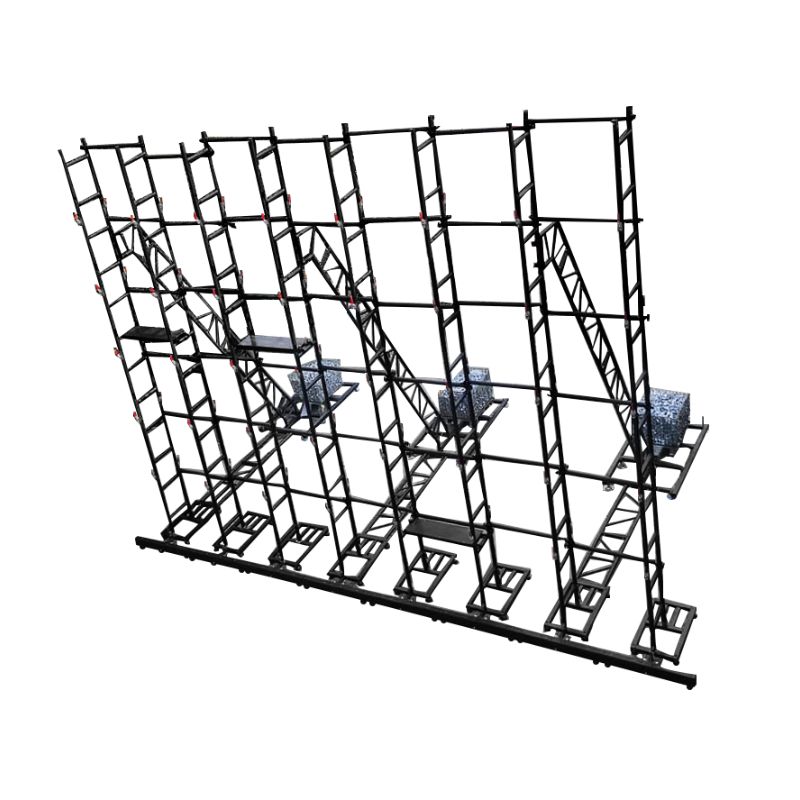
Example of a large LED wall ground support configuration with enlarged bases and ballast provisions.
Understand the Requirements of a Large LED Wall Project
The first step is to define the actual requirements of the LED display rather than selecting a support structure based on screen dimensions alone. A wider or taller display changes the structural demands, while outdoor installations introduce additional considerations such as wind pressure and ground conditions.
Before selecting a ground support system, collect the following project information:
- Screen dimensions: Confirm the overall width, height, and display configuration.
- LED cabinet specifications: Check cabinet dimensions, individual weight, connection positions, and locking-hole arrangements.
- Total equipment weight: Include LED cabinets, support components, accessories, and any additional equipment carried by the structure.
- Installation environment: Identify whether the structure will be installed indoors, outdoors, on a temporary event site, or at a permanent venue.
- Ground conditions: Evaluate floor levelness, bearing capacity, available installation space, and possible anchoring points.
- Screen configuration: Determine whether the display is straight, curved, ground-stacked, or elevated.
These details help determine the appropriate truss arrangement, base configuration, connection method, and stabilization requirements. For large installations, a structural assessment should be completed before manufacturing or assembly begins.
Choose the Right Aluminum Truss Support Structure
The truss configuration should match the screen layout and the forces acting on the structure. Aluminum trusses are commonly used in LED wall support systems because they provide a structural framework with relatively low self-weight and modular assembly options.
A typical LED wall ground support structure consists of several interconnected components:
- Adjustable Base: Supports the vertical framework and helps level the structure.
- Ground Beam: Connects the base sections and provides a mounting interface for the LED cabinets.
- Ladder Truss: Forms the main vertical support and connects the cabinet mounting positions.
- Crossbar: Connects the ladder trusses and helps maintain the alignment and rigidity of the framework.
- Locking Components: Secure the LED cabinets to the supporting structure.
- Ballast or Counterweight: Adds stabilizing weight when required by the structural design.
For example, GF-Truss offers a 4×3m Aluminum LED Screen Ground Support made with 6061-T6 aluminum alloy truss components. Its listed configuration includes adjustable bases, ground beams, ladder trusses, and crossbars. The product page also identifies 500×500mm LED cabinets as its compatible standard configuration.
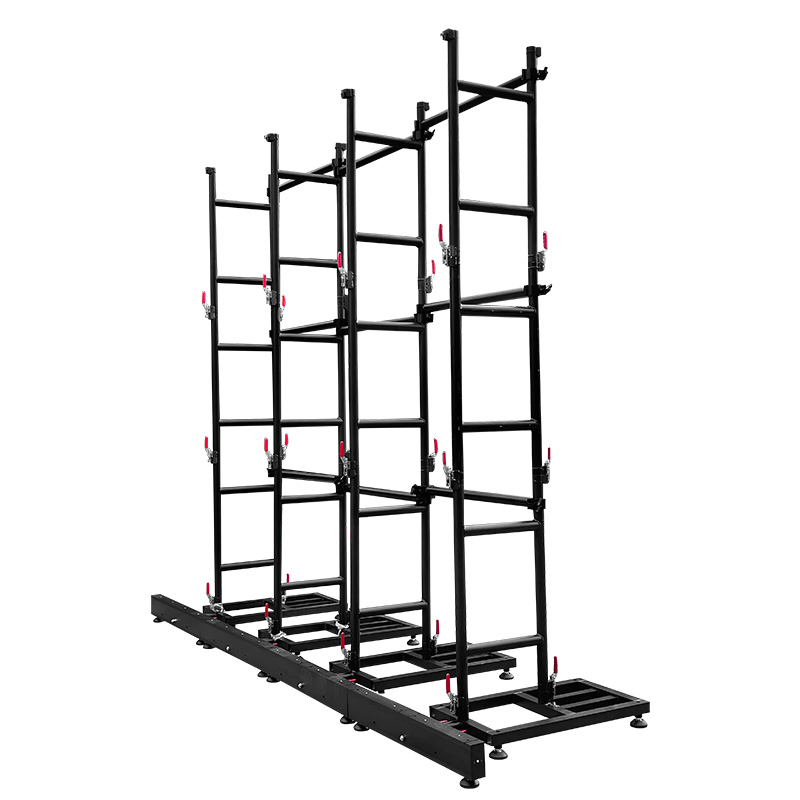
Aluminum ladder truss and base components used in an LED screen ground support system.
When moving to a larger screen, the support layout should not simply be enlarged proportionally. Tower spacing, member dimensions, connection details, and support reactions need to be checked against the actual design loads.
Design a Stable Base and Ballast System
The base is one of the most important parts of a large LED wall ground support structure. It transfers the loads from the vertical trusses to the supporting surface and helps resist overturning forces.
For large screens, especially those installed outdoors, the structural design must consider both the weight of the display and environmental forces. Wind pressure acting on a large LED surface can create significant overturning moments, even when the supporting structure itself has sufficient vertical load capacity.
Several stabilization methods may be considered depending on the installation:
- Enlarged bases: Provide a wider support footprint and can improve resistance to overturning when properly designed.
- Ballast systems: Add calculated stabilizing weight to the base assembly.
- Ground anchoring: Connect the support structure to a suitable foundation where the site and design allow it.
- Additional bracing: Provides supplementary structural restraint where required by engineering calculations.
GF-Truss lists an 8×6m Ballast System Enlarged Base LED Video Wall Ground Support specifically for large-scale LED displays. Its configuration includes adjustable bases, ground beams, aluminum ladder trusses, and provisions for ballast and enlarged bases.
The product documentation also describes options such as counterweights, concrete anchoring, and steel cable restraints. These methods should be selected according to the site conditions and the approved structural design rather than applied as interchangeable solutions.
Ballast-based LED wall ground support configuration.
One important point is that ballast weight cannot be determined by screen size alone. Engineers need to consider screen height, wind exposure, support geometry, base dimensions, ground conditions, and applicable local requirements before specifying the required stabilizing measures.
Select the Right Cabinet Locking and Connection Method
The connection between LED cabinets and the support structure directly affects installation accuracy and the integrity of the assembled display. The locking method must match the cabinet's connection design.
Two common connection options are quick locks and screw locks.
Quick Lock Connections
Quick locks are suitable for compatible LED cabinets with matching locking holes. They allow installers to secure panels through a faster alignment and locking process, which is particularly useful for rental displays and projects requiring frequent assembly and dismantling.
Screw Lock Connections
Screw locks provide a mechanical fastening option for cabinets that do not have compatible quick-lock interfaces. The hole spacing and connection hardware must match the cabinet design to ensure proper engagement.
GF-Truss provides both locking options in its LED wall support product range. For example, its 8×5m system lists a screw-lock configuration for 500×500mm cabinets, while the 8×6m ballast system also specifies cabinet locking components.
Before ordering, buyers should provide cabinet drawings or samples, including the connection-hole positions and dimensions. This helps the manufacturer verify compatibility and configure the appropriate mounting components.
Choose Between Straight and Curved LED Wall Configurations
The display shape determines how the support framework and cabinet connections should be arranged. Straight and curved LED walls have different alignment and connection requirements, so the support structure should be designed for the intended screen geometry.
Straight LED Wall Support: A straight configuration is suitable for conventional rectangular displays used at concerts, exhibitions, conferences, and sporting events. Its support framework is arranged along a straight line, with vertical supports and horizontal connections positioned according to the cabinet layout.
Curved LED Wall Support: A curved configuration requires coordinated cabinet positioning and adjustable connection arrangements to achieve the required screen radius. The design must account for both the inner and outer curvature of the display.
For projects requiring curved layouts, GF-Truss offers an 8×4m Curved LED Screen Ground Support Truss System. The corresponding product category describes angle adjustment within ±10 degrees, providing a reference for projects that require flexible curved display arrangements.
The final configuration should be checked against the LED cabinet's permitted curvature, connection geometry, and the structural design. A curved screen should not be treated as a straight support system with panels simply rotated into position.
Assemble the LED Wall Ground Support Structure Step by Step
Once the structural design and component selection are confirmed, installation should follow a controlled sequence. A clear assembly process helps reduce alignment errors and ensures that connections are checked before additional loads are introduced.
Step 1: Prepare the Installation Site
Check the ground surface, available installation area, access routes, and working clearances. Mark the positions of the bases according to the approved layout drawings. Confirm that the supporting surface can accommodate the expected reactions from the completed structure.
Step 2: Position and Level the Bases
Place the adjustable bases at their specified positions and check their elevation and alignment. Correct minor level differences using the designated adjustment mechanisms. If the floor has inadequate bearing capacity or significant unevenness, the installation method must be reviewed before proceeding.
Step 3: Install the Ground Beams and Ladder Trusses
Connect the ground beams to the base assemblies and install the vertical ladder trusses according to the structural drawings. Confirm that all connectors, locking devices, and mechanical fasteners are correctly engaged.
Step 4: Connect the Crossbars and Stabilizing Components
Install the horizontal crossbars and any specified bracing components. These connections help maintain the intended geometry and reduce unwanted movement. Install the designed ballast or anchoring system according to the approved configuration.
Step 5: Mount and Secure the LED Cabinets
Install the LED cabinets using compatible locking hardware. Check panel alignment, connection engagement, and the overall screen geometry throughout the installation. Follow the specified installation sequence to avoid introducing unbalanced loads during assembly.
Step 6: Complete Structural and Electrical Inspections
Before powering on the display, inspect the base connections, truss joints, locking devices, cabinet alignment, and stabilization components. Electrical connections and cable routing should also be checked separately by qualified personnel.
Complete Safety Checks Before the LED Wall Goes Live
A large LED wall should not be considered ready simply because all panels have been installed. Structural verification is essential, particularly for outdoor events and installations with significant screen heights.
The following inspection checklist provides a practical starting point:
| Inspection Area | What to Check |
|---|---|
| Base Assembly | Position, leveling, foundation condition, and anchoring. |
| Truss Connections | Connection engagement, fasteners, locking pins, and visible damage. |
| Ballast System | Specified ballast quantity, placement, and securing arrangements. |
| LED Cabinets | Panel alignment, locking engagement, and mounting security. |
| Environmental Conditions | Wind conditions, ground stability, drainage, and surrounding hazards. |
| Electrical Installation | Power distribution, cable protection, grounding, and connections. |
For outdoor installations, the operating wind limits and any required evacuation or dismantling procedures should be established in advance. If weather conditions exceed the approved operating limits, the event team must follow the project's safety plan rather than relying on the ballast system alone.
Common Mistakes When Building Large LED Wall Support Structures
Many installation problems can be avoided by addressing structural and compatibility issues before the equipment reaches the venue.
- Choosing a support structure based only on screen dimensions: Screen dimensions do not represent the complete structural load. Cabinet weight, wind exposure, support geometry, and ground conditions must also be considered.
- Ignoring cabinet connection compatibility: Different LED cabinets may have different hole positions and locking arrangements. Confirm compatibility before manufacturing the support components.
- Using insufficient stabilization: A larger screen does not automatically become stable with a wider base. Ballast and anchoring requirements need to be calculated.
- Overlooking ground conditions: An uneven or weak supporting surface can affect the performance of the entire structure.
- Skipping connection inspections: Incorrectly installed locking devices and loose mechanical connections can compromise the structural assembly.
- Failing to plan transportation and assembly: Large modular structures require component identification, installation drawings, suitable handling equipment, and a clear assembly sequence.
How to Select a Suitable LED Wall Ground Support Manufacturer
Selecting a manufacturer is not just about comparing product prices. For large LED display projects, buyers should evaluate the manufacturer's ability to understand cabinet compatibility, configure structural components, and provide project-specific technical information.
Before placing an order, consider asking the manufacturer for:
- Product drawings and component specifications.
- Material information and applicable test documentation.
- Cabinet compatibility and connection details.
- Structural design information and project-specific load calculations.
- Base, ballast, and anchoring configuration details.
- Installation guidance and replacement component availability.
GF-Truss provides straight, curved, and off-ground LED wall support configurations, along with customized support solutions. Its product range includes systems for different screen dimensions and cabinet arrangements.
For a large-scale project, the 8×5m Aluminum LED Screen Bracket Stacking System provides a product reference for outdoor display applications. The listed configuration uses aluminum alloy components and identifies additional weights, enlarged bases, and extra ladder trusses as stabilization considerations.
Providing the screen layout, cabinet drawings, total equipment weight, installation location, and expected environmental conditions will help the manufacturer evaluate the project more accurately and recommend an appropriate support configuration.
Frequently Asked Questions About Large LED Wall Ground Support Structures
1. What components are needed to build a large LED wall ground support structure?
A typical system includes adjustable bases, ground beams, ladder trusses, crossbars, cabinet locking components, and any required ballast or anchoring equipment. The exact component list depends on screen dimensions, structural design, and installation conditions.
2. Which aluminum alloy is commonly used for LED wall ground support systems?
Aluminum alloy 6061-T6 is one material specified in GF-Truss LED wall support products. Material selection for a particular project should also consider member dimensions, connection details, and structural calculations.
3. How do you prevent a large LED wall from tipping over?
A suitable design may combine enlarged bases, calculated ballast, ground anchoring, and additional bracing. The appropriate solution depends on screen height, wind exposure, support geometry, and ground conditions.
4. What is the difference between quick locks and screw locks?
Quick locks provide faster cabinet connections when the LED panels have compatible locking holes. Screw locks use mechanical fasteners to secure cabinets and are suitable for compatible conventional connection arrangements.
5. Can the same LED wall ground support system be used for straight and curved screens?
Not necessarily. Straight and curved LED walls have different alignment and connection requirements. A curved display generally requires a support arrangement designed around its intended radius and cabinet geometry.
6. What information should buyers provide when requesting a customized LED wall support system?
Buyers should provide screen width and height, cabinet dimensions, cabinet weight, connection drawings, installation environment, ground conditions, and any specific configuration requirements. These details help the manufacturer assess the project and prepare a suitable structural proposal.
Build a Reliable LED Wall Support Solution with GF-Truss
Building a large LED wall ground support structure involves several interconnected decisions, from selecting the truss configuration and matching cabinet connections to designing the base and verifying structural stability. Each component must work as part of a coordinated system.
GF-Truss provides aluminum LED wall ground support solutions in different configurations, including straight, curved, elevated, and ballast-based systems. Whether you are planning an exhibition display, concert stage, outdoor event, or large commercial video wall, sharing your screen specifications and installation requirements is a practical starting point for developing a suitable support structure.
Contact GF-Truss to discuss your LED wall support project and explore a configuration based on your display dimensions, cabinet specifications, and site conditions.
Website: www.gftrusses.com