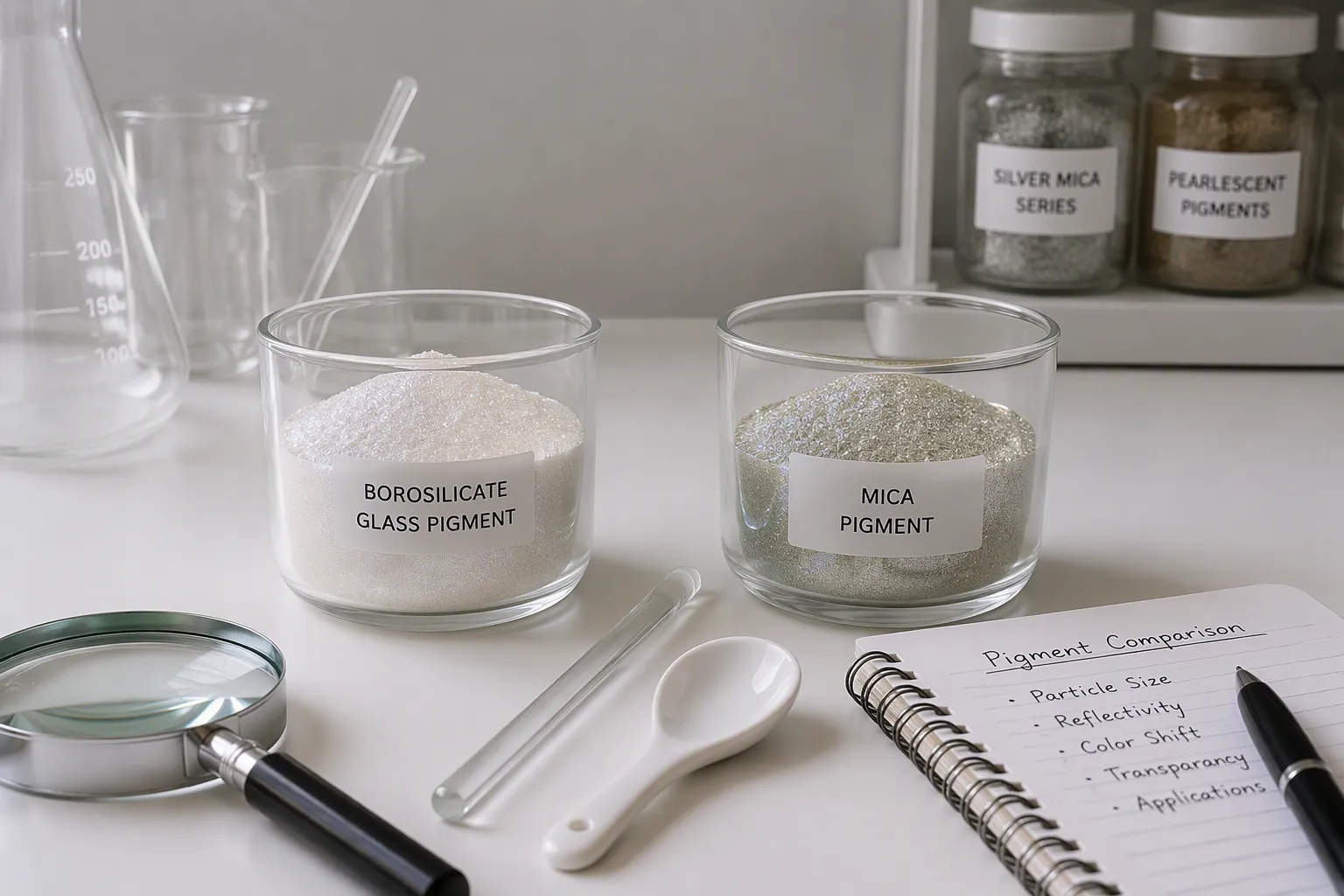
You should choose borosilicate glass pigments when your project demands superior durability, intense color effects, and strong resistance to heat or chemicals. Turn to Kolortek borosilicate glass pearl pigment for premium applications. These pigments deliver long-lasting sparkle and clarity that justify their higher cost.
Key Takeaways
-
Borosilicate glass pigments last longer and resist fading, heat, and chemicals better than mica pigments.
-
They create brighter, more intense colors and special effects like color-travel that mica cannot achieve.
-
They are safer and more ethical because they contain no mica, which can have child labor concerns.
Durability and Longevity

Fade Resistance in Harsh Conditions
You expose pigments to sunlight, humidity, and pollution every day in outdoor applications. Mica pigments often lose their luster under these conditions. Borosilicate glass pigments resist fading because their glass composition does not degrade under UV radiation. Kolortek borosilicate glass pearl pigment maintains its original color intensity after prolonged sun exposure. You get reliable performance in automotive finishes, architectural coatings, and exterior plastics.
Chemical and Heat Stability
Your formulations may encounter acids, alkalis, or solvents during processing. Borosilicate glass pigments withstand these chemical challenges without breaking down. They also tolerate high temperatures during manufacturing. Mica pigments can discolor or lose effect at elevated temperatures. Borosilicate glass pigments remain stable beyond 500°C. This heat resistance makes them ideal for powder coatings, injection-molded plastics, and ceramic applications. You avoid color shifts and maintain consistent results throughout production.
When Durability Is Non-Negotiable
Certain applications demand pigments that last for years without visible change. Automotive exterior coatings face constant weather exposure. Outdoor signage must resist fading season after season. Industrial coatings require resistance to chemical spills and abrasion. You should choose borosilicate glass pigments for these demanding environments. The higher upfront cost delivers long-term value through reduced maintenance and replacement. When your product's appearance must endure, borosilicate glass pigments provide the reliable solution you need.
Color and Effect
High Sparkle and Clarity
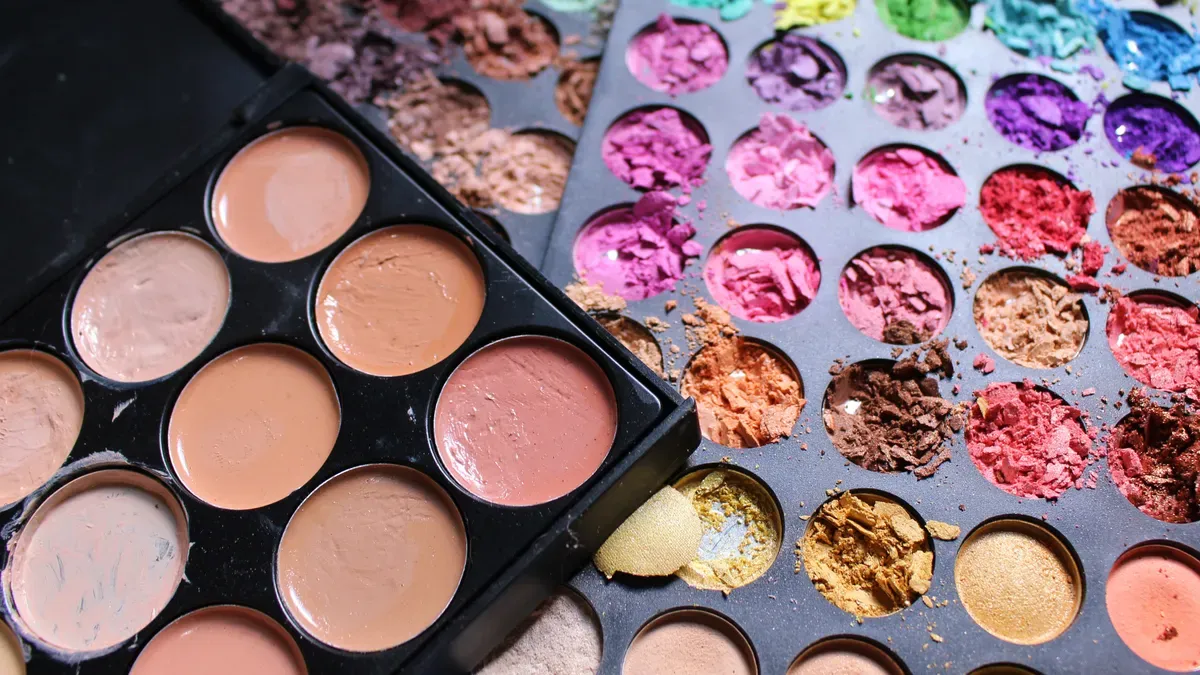
Borosilicate glass pigments deliver a level of sparkle and clarity that mica pigments cannot match. The glass substrate provides exceptional transparency. Light passes through the pigment particles without scattering. You see pure, intense color with a brilliant, gem-like quality. Kolortek borosilicate glass pearl pigment creates a diamond effect rather than the soft satin look of mica. Your products gain a premium appearance that catches the eye immediately.
Unique Visual Effects Compared to Mica
Borosilicate glass pigments produce optical effects that mica simply cannot achieve. You can create:
-
Color-travel effect: different color shades appear depending on the angle of incident light.
-
Optically variable effect: one pigment shows three colors depending on viewing angle.
-
High transparency with clean, pure colors and intense sparkle.
Mica-based pearlescents lack the ability to produce these angular-shifting effects. Your consumers experience surprise and delight as colors change before their eyes. This dynamic visual performance sets your products apart in competitive markets.
When You Need Intense, Pure Color
You should choose borosilicate glass pigments when your formulation demands maximum color intensity and purity. Premium cosmetics, high-end automotive finishes, and luxury packaging all benefit from this superior optical performance. The higher sparkle intensity and cleaner transparency create visual impact that standard mica cannot replicate. When your brand needs to communicate quality and exclusivity, borosilicate glass pigments provide the answer. You invest in a pigment that transforms ordinary products into extraordinary experiences.
Safety and Regulatory
Mica-Free Formulations
You may face regulatory pressure to eliminate mica from your formulations. Some regions now require full disclosure of mineral sourcing. Borosilicate glass pigments offer a straightforward alternative. They contain no mica, so you avoid the documentation burden that comes with mineral-based ingredients. Kolortek borosilicate glass pearl pigment provides a clean label solution. Your regulatory team spends less time tracing supply chains. You gain a pigment that meets modern compliance standards without compromising visual performance.
Ethical Sourcing and Child Labor Concerns
Mica mining has drawn international scrutiny for child labor practices in certain regions. You may struggle to verify the ethical origin of mica pigments. This uncertainty creates reputational risk for your brand. Borosilicate glass pigments eliminate this concern entirely. They come from controlled manufacturing processes rather than mined mineral deposits. Kolortek maintains transparent production standards. You can assure your customers that your products carry no ethical baggage. This peace of mind has real value in today's conscious consumer market.
When Safety and Compliance Drive Choice
You should select borosilicate glass pigments when regulatory compliance and ethical sourcing top your priority list. Cosmetic brands face strict ingredient disclosure rules. Children's products require verified safe materials. Companies with strong sustainability commitments need traceable supply chains. Borosilicate glass pigments satisfy all these requirements. You protect your brand reputation while delivering superior color effects. The decision becomes clear when safety and ethics guide your formulation strategy.
Cost Considerations
Price Comparison with Mica Pigments
Borosilicate glass pigments cost more than mica pigments. You pay a premium of two to five times the price per kilogram. Mica pigments benefit from abundant mineral deposits and established mining operations. Borosilicate glass pigments require controlled manufacturing processes with higher energy input. Kolortek delivers competitive pricing for this premium pigment category. You receive consistent quality that justifies the investment.
|
Factor |
Mica Pigments |
Borosilicate Glass Pigments |
|---|---|---|
|
Unit cost |
Lower |
Higher |
|
Lifespan |
Shorter |
Longer |
|
Replacement frequency |
Frequent |
Rare |
|
Total cost of ownership |
Higher over time |
Lower over time |
Justifying the Premium for High-Value Applications
You should evaluate cost against total value rather than unit price alone. Premium applications demand pigments that perform without failure. Luxury automotive brands cannot risk fading or color shift. High-end cosmetic lines need brilliant effects that last on the shelf. Kolortek borosilicate glass pearl pigment reduces your rejection rates and rework costs. You avoid customer complaints about inconsistent appearance. The premium pays for itself through superior product quality and brand protection.
When Cost Is Secondary to Performance
You should prioritize performance over price when your application demands the best. Aerospace coatings, medical device finishes, and luxury packaging all require exceptional pigment quality. These markets tolerate higher material costs because failure carries severe consequences. Your customers expect flawless appearance and lasting durability. Kolortek borosilicate glass pearl pigment meets these demanding standards. You gain a competitive advantage that cheaper alternatives cannot provide. When your reputation depends on visual excellence, cost becomes a secondary concern.
Application Suitability
Automotive and Outdoor Coatings
Automotive manufacturers demand pigments that survive years of sun, rain, salt, and road debris. You need a finish that looks showroom-new after a decade of exposure. Borosilicate glass pigments meet this challenge through their inherent stability. The glass flakes resist UV degradation and chemical attack from acid rain and bird droppings. Your automotive clear coat maintains its depth and sparkle far longer than mica-based alternatives.
Outdoor architectural coatings face similar punishment. Building facades, signage, and exterior panels endure constant weather stress. You cannot afford frequent repainting or replacement. Borosilicate glass pigments lock in color and effect for the life of the coating. Kolortek borosilicate glass pearl pigment gives your outdoor products a durable, premium appearance that resists environmental wear.
The technical advantages of borosilicate glass flakes become clear when you examine their structure:
Borosilicate glass flakes are made from clear, transparent calcium aluminum borosilicate crystals. Their clarity allows the resulting pearl pigments to appear more brilliant and sparkly. Unlike natural mica, glass flakes contain no impurities that hinder light refraction when a metal oxide layer is applied. This purity makes them particularly suited for high-shine and chameleon pearl pigments, though they are more expensive than mica-based alternatives.
This purity translates directly into performance benefits for automotive and outdoor applications. You achieve chromatic purity and clean interference colors that mica cannot deliver. The table below summarizes the key technical differences:
|
Technical Attribute |
Borosilicate Glass Flakes |
Mica |
Industry Requirement Addressed |
|---|---|---|---|
|
Particle size |
50–200 microns, larger |
Smaller |
Automotive, motorcycle, premium consumer products needing dramatic, jewel-like visual impact |
|
Flatness & optical transparency |
Flatter and more optically transparent |
Less flat/transparent |
High-brilliance, high-sparkle coatings |
|
Sparkle quality |
Bolder, more defined sparkle with greater depth and clarity; "liquid metal" or "wet look" |
Less defined sparkle |
Custom automotive, premium consumer goods |
|
Impurities |
No impurities that hinder light refraction |
Natural impurities hinder light refraction |
Coatings requiring chromatic purity and clean interference colors |
|
Application trade-offs |
Difficult to fluidize in powder hoppers, inconsistent electrostatic charging, surface roughness; requires higher resin content and thicker films (80–120 microns) plus clear topcoats |
Easier to process |
Powder coatings, industrial coatings where formulation adjustments are acceptable |
You should note the trade-offs listed in the final row. Borosilicate glass pigments require formulation adjustments in powder coating systems. You need higher resin content and thicker films to achieve optimal results. These adjustments reward you with superior visual impact and longevity. Automotive brands accept these requirements because the final appearance justifies the effort.
Cosmetics and Personal Care
Cosmetics demand pigments that deliver brilliant effects without compromising safety. You formulate lipsticks, eyeshadows, and nail polishes that consumers apply directly to their skin. Borosilicate glass pigments offer distinct advantages in this sensitive category. The glass composition contains no heavy metals or mineral impurities. You avoid the regulatory scrutiny that accompanies mica sourcing from certain regions.
High-end cosmetic brands choose borosilicate glass pigments for their superior sparkle and color purity. You create products that stand out on retail shelves. The intense, gem-like effect catches light from every angle. Consumers perceive greater value in products with this level of visual performance. Kolortek borosilicate glass pearl pigment helps you formulate cosmetics that command premium prices.
Personal care products also benefit from the clean label story that borosilicate glass pigments provide. You can market your products as mica-free. This claim resonates with consumers who worry about ethical sourcing and child labor in mica mining regions. Your brand gains a competitive edge through transparency and responsible ingredient selection.
The particle size advantage matters in cosmetics as well. Borosilicate glass flakes range from 50 to 200 microns. This larger size creates bolder, more defined sparkle. You achieve a "wet look" or "liquid metal" effect that smaller mica particles cannot replicate. Your eyeshadow palettes and highlighters deliver dramatic visual impact that consumers notice immediately.
When Industry Requirements Point to Borosilicate
You should select borosilicate glass pigments when your industry demands performance that mica cannot provide. Several key indicators point to this choice:
-
Borosilicate-based pigments are positioned in high-brilliance and high-sparkle product segments.
-
They serve applications where conventional mica cannot deliver the required chromatic purity, sparkle, or angle-dependent effects.
-
High-performance borosilicate products generally require more specialized manufacturing technology than conventional natural-mica grades.
Automotive custom finishes represent one clear example. You need pigments that create color-travel and optically variable effects. Mica pigments lack the transparency and flatness to produce these angular-shifting colors. Borosilicate glass pigments make these effects possible. Your custom motorcycle or luxury car finish becomes a head-turning spectacle.
Premium consumer electronics provide another example. Smartphone cases, laptop covers, and gaming accessories compete on visual appeal. You need pigments that deliver intense, pure color with exceptional sparkle. Borosilicate glass pigments meet this requirement. Your products stand out in a crowded marketplace.
Luxury packaging also points to borosilicate glass pigments. High-end perfume boxes, cosmetic containers, and spirit bottles use color effects to signal quality. You create packaging that consumers want to keep and display. The pigment investment pays dividends through enhanced brand perception.
Powder coating applications require careful evaluation. Borosilicate glass pigments present processing challenges in powder systems. You need specialized equipment and formulation expertise. However, the resulting finish quality justifies the effort for premium product lines. You achieve a level of brilliance and depth that powder coatings with mica cannot match.
Industrial coatings for harsh environments also favor borosilicate glass pigments. Chemical plants, offshore platforms, and marine vessels need coatings that resist corrosion and fading. You specify pigments that maintain their appearance under extreme conditions. Borosilicate glass pigments deliver this durability. Your maintenance costs decrease over the coating's lifespan.
You should evaluate your specific application against these industry indicators. Does your product compete on visual excellence? Do you face regulatory pressure to eliminate mica? Does your coating need to survive extreme weather or chemical exposure? A positive answer to any of these questions points toward borosilicate glass pigments. The higher material cost becomes an investment in product quality and brand reputation.
Why Borosilicate Glass Pearl Pigment Outperforms in Premium Formulations
Transparency Meets Brilliance
You achieve unmatched brilliance when you use borosilicate glass pearl pigment in your formulations. The glass substrate offers exceptional transparency. Light passes through the pigment particles without scattering. This clarity allows the metal oxide coating to produce pure, intense color. You see a gem-like sparkle rather than the soft satin effect of mica. The absence of natural impurities in the glass flakes means no interference with light refraction. You get clean interference colors and chromatic purity. This optical performance transforms ordinary coatings into premium finishes.
Consistent Particle Size and Purity
You benefit from precise manufacturing control with borosilicate glass pigments. Each batch delivers uniform particle size distribution. This consistency eliminates the variability you encounter with natural mica. Mica flakes come from mined minerals with inherent size and shape irregularities. Borosilicate glass flakes undergo controlled production processes. You receive flakes with consistent thickness and flatness. Kolortek ensures this uniformity through stringent quality standards. You achieve predictable color effects and sparkle intensity in every application. This purity also means you avoid contamination risks associated with natural minerals.
When Formulators Demand Predictable Results
You should select borosilicate glass pigments when your formulation requires reliable, repeatable performance. Premium applications leave no room for surprises. You need to match color specifications batch after batch. Borosilicate glass pigments deliver this consistency. You reduce rework and waste during production. Color matching becomes straightforward because the pigment behaves predictably.
When your reputation depends on flawless product appearance, you cannot tolerate batch-to-batch variation. Borosilicate glass pigments eliminate this risk.
You simplify quality control procedures. Your team spends less time adjusting formulations to compensate for pigment variability. The predictable performance of borosilicate glass pearl pigment allows you to focus on creating exceptional products. You meet customer expectations for consistent color and sparkle every time.
Choose borosilicate glass pigments when durability, intense color effects, safety compliance, and premium quality matter most. Prioritize borosilicate glass pearl pigment when performance and ethical sourcing outweigh cost. Mica pigments remain suitable for budget-friendly, general-purpose applications where their limitations are acceptable.
FAQ
What makes borosilicate glass pigments more durable than mica?
Their glass composition resists UV radiation, chemicals, and temperatures above 500°C. You get long-lasting sparkle without fading or discoloration over time.
Are borosilicate glass pigments safe for cosmetic formulations?
Yes. They contain no heavy metals or mineral impurities. Kolortek borosilicate glass pearl pigment meets strict cosmetic safety standards for direct skin contact.
How do you justify the higher cost of borosilicate glass pigments?
Superior durability and intense visual effects reduce long-term replacement costs. You gain consistent premium performance that protects your brand reputation.