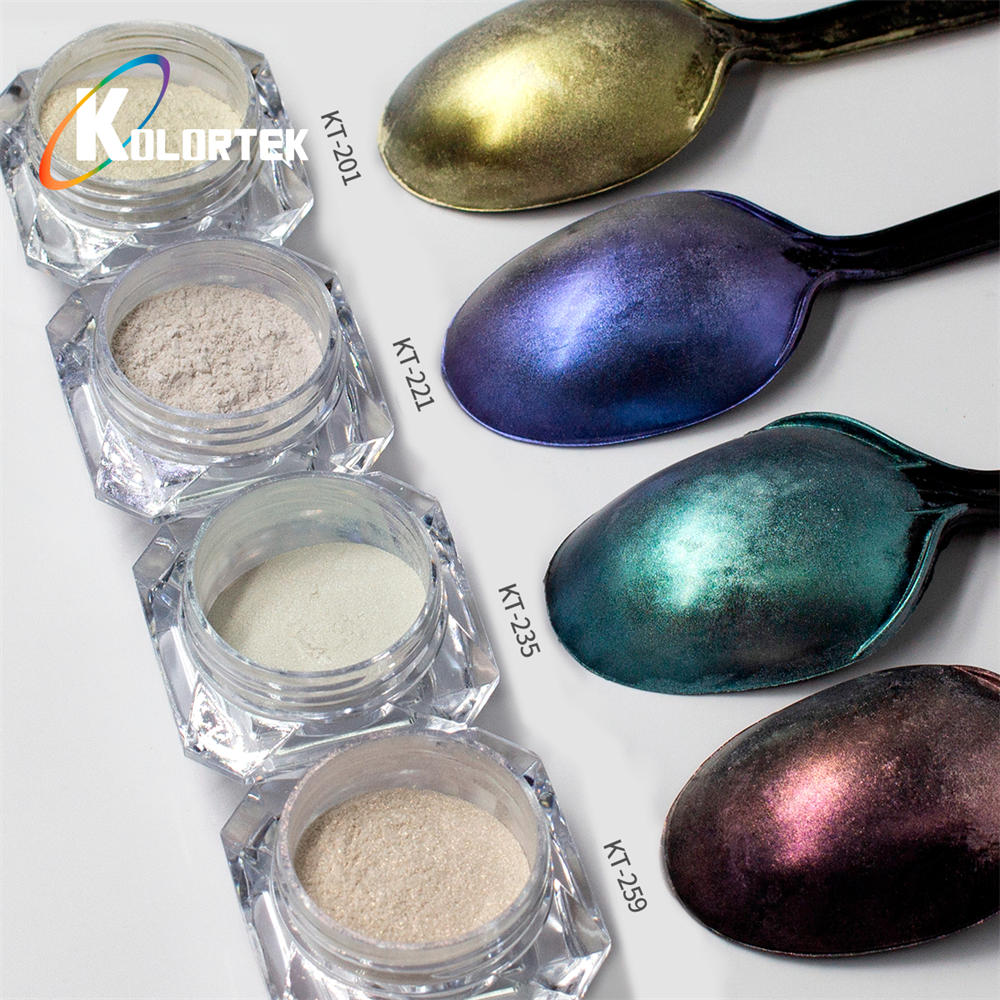
Interference pigments are effect pigments built on a flat, transparent platelet coated with a thin metal oxide film. The color comes from thin-film interference rather than absorption, so you see one color at the reflection angle and its complement in transmission, and the color changes as the viewing angle changes. The substrate can be natural mica, synthetic mica or borosilicate glass; the substrate sets the brightness, transparency and heat stability of the finished pigment. You will find these pigments in cosmetics, coatings, plastics and printing inks.
Key Takeaways
-
Interference pigments create color by light interference, not absorption, giving shimmer and color shift as you change your viewing angle.
-
You can use these pigments in cosmetics, crafts, and industrial products to add stunning visual effects.
-
The same interference color can read differently in brightness and clarity depending on whether the substrate is natural mica, synthetic mica or borosilicate glass.
How Interference Pigment Powder Works
The Role of Mica and Titanium Dioxide
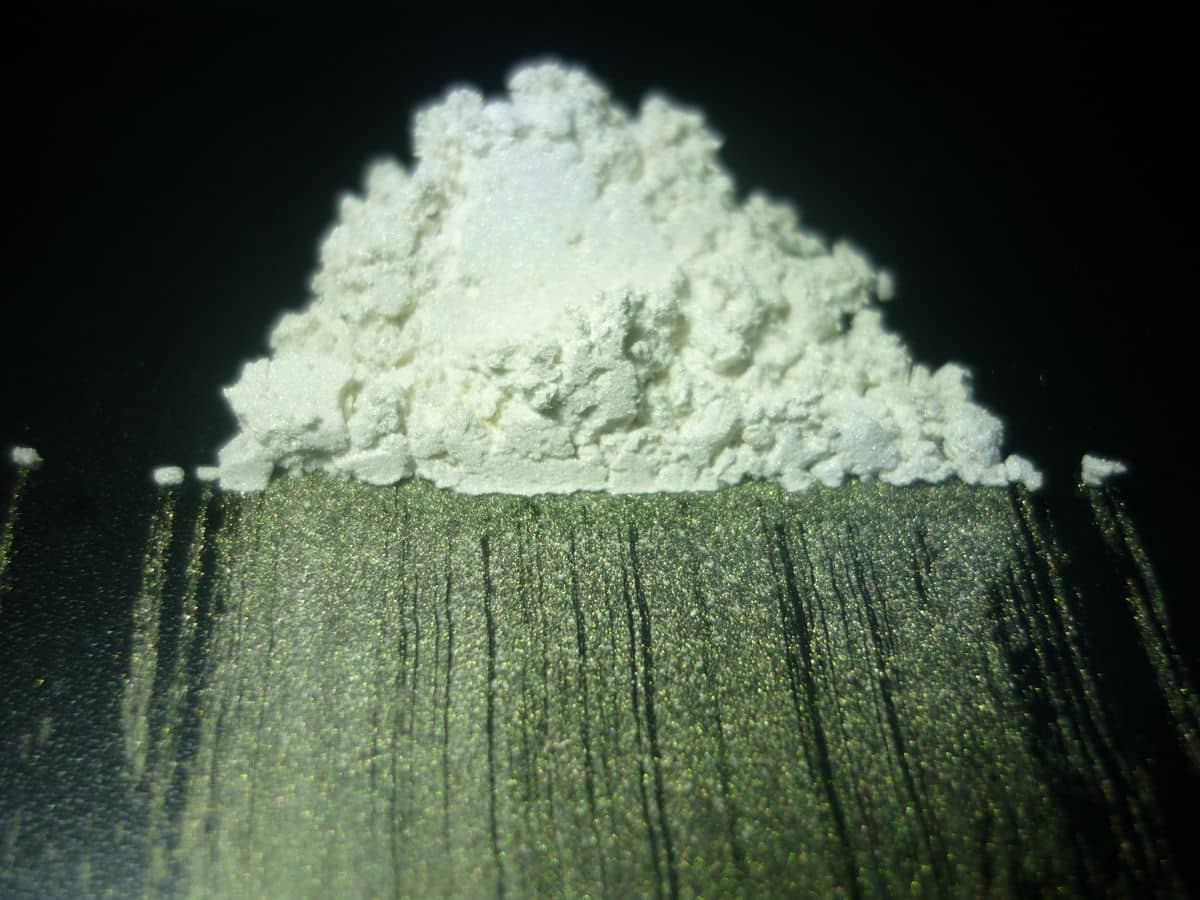
You begin with a platelet of natural mica. Its flat shape provides the ideal substrate for thin-film coatings. The thickness of these mica platelets ranges from 0.1 to 3 microns.
Manufacturers deposit a layer of titanium dioxide (TiO₂) onto the mica. TiO₂ has a high refractive index, while mica has a lower index. This contrast is essential for strong interference effects. To enhance the color, you can apply multiple alternating layers of high- and low-index materials. However, practical limits such as absorption and mechanical stress restrict the total number of layers.
Light Interference Explained Simply
When TiO₂ is deposited as a controlled thin layer on mica, differences in refractive index split and recombine light. The coating thickness decides whether the pigment appears silver-white or shows an interference color. Part of the incoming light reflects from the outer TiO₂ surface. Another part passes through the coating and reflects at a deeper interface. When those light paths recombine, selected wavelengths reinforce one another while others weaken. This is thin-film interference. Increasing the optical thickness shifts the reinforced wavelengths through gold, red, blue and green.
As you change your viewing angle, the optical path difference changes. This shifts the peak wavelength of constructive interference across the visible spectrum. The result is the distinctive color shift that makes interference pigments so valuable in cosmetics, crafts, and industrial applications.
How Coating Thickness Changes Color
The coating thickness controls the interference color. A thin TiO₂ film gives silver white; as the film thickens the color runs through yellow, red, violet and blue, and finally green at the thickest films. Beyond that point the color is still there but the lustre drops, because absorption and mechanical stress in a very thick stack work against the reflectance. In practice you select by the color you need rather than by a thickness figure, and you confirm it on the substrate you will actually use.
Understanding how the pigment works helps you select the right grade for your project.
Key Properties and Effects of Interference Pigments
Shine and Luster
Interference pigments deliver exceptional shine and luster. The smooth mica surface reflects light efficiently. The titanium dioxide coating boosts this reflection through constructive interference. You see a brilliant, mirror-like finish. This effect differs from conventional pigments. Ordinary pigments absorb light and scatter it randomly. Interference pigments direct light in a controlled manner. The result is a deep, radiant glow.
Color Shift and Angle-Dependent Color
You observe different colors as you tilt the pigment. This phenomenon is called color travel. The optical path length changes with your viewing angle. Constructive interference shifts to different wavelengths. You see red at one angle and green at another. The effect is measured with a multi-angle spectrophotometer: the sample is illuminated and read at several angles, and the change in hue between them is what quantifies the color travel. Two pigments can look alike head-on and behave very differently at a glance angle, so compare them at more than one angle before you commit to a grade.
Layering and Mixing Behavior
You can layer interference pigments to create custom effects. A base coat of one color shifts the appearance of the top coat. Mixing pigments produces new blends. Combine gold and blue to achieve green tones. The particle size affects the final look. Larger particles create more sparkle. Smaller particles produce a softer, satin finish. You should test small batches before full production. This approach ensures you achieve the desired result.
Where to Use Interference Pigments
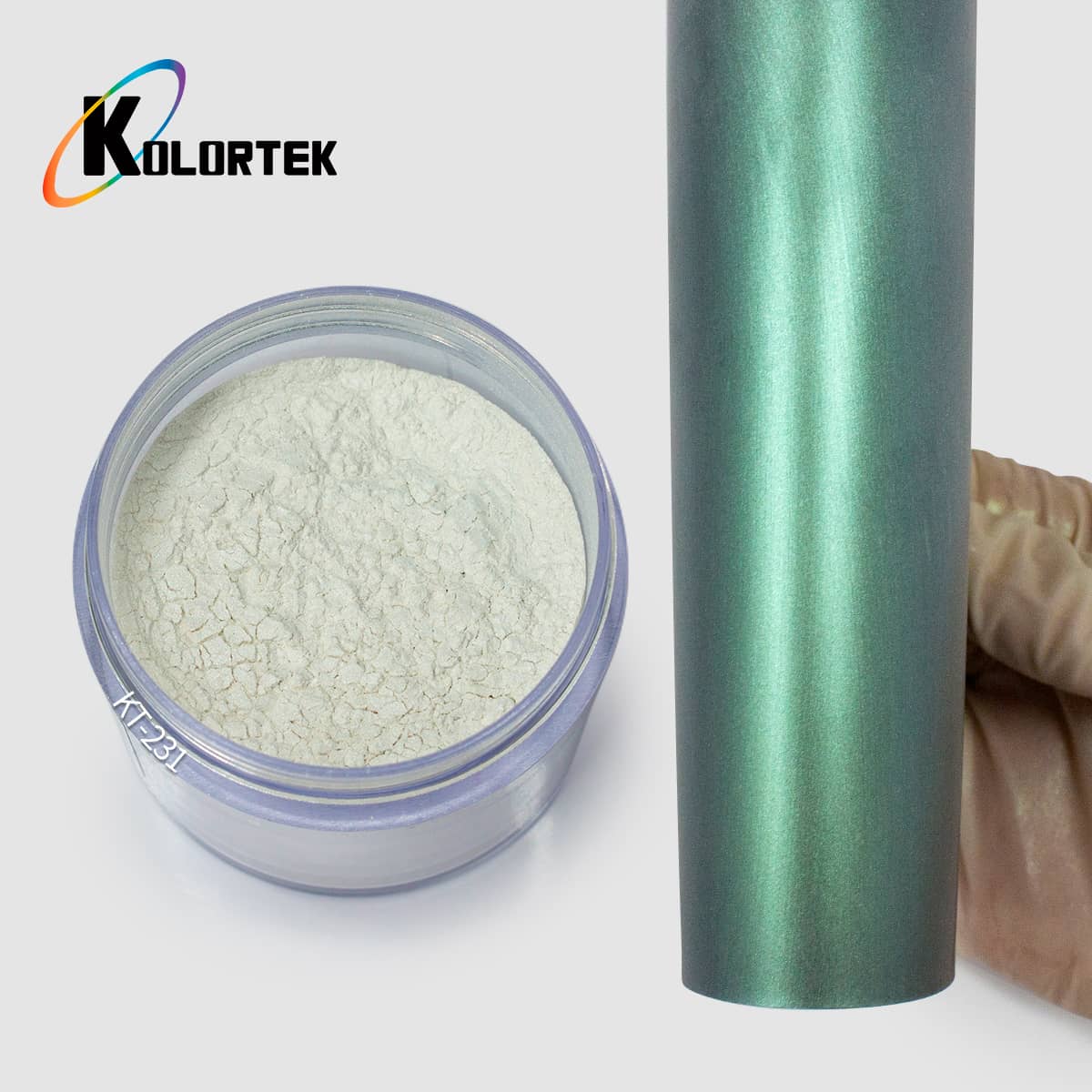
Interference pigments serve a wide range of applications. You can find them in cosmetics, crafts, automotive finishes, and security printing. Each application demands specific pigment properties. Understanding these requirements helps you select the right product for your project.
Cosmetics and Beauty Products
The cosmetics industry relies heavily on interference pigments for their unique visual effects. You see these pigments in eyeshadows, lipsticks, nail polishes, and blush. Formulators choose them for several reasons.
First, interference pigments provide a soft, radiant glow. The color shift effect creates depth and dimension on the skin. A single pigment can produce multiple colors as the light changes. This versatility reduces the number of raw materials needed in a formulation.
Second, the platelets lie flat, so they build an even film rather than a patchy one. In a pressed powder the binder and the pressing step do most of the adhesion work; in a liquid formula the oil phase carries the platelets. Where wear and adhesion have to go further, that is done with a surface treatment rather than with the substrate.
Third, formulators can combine interference pigments with other colorants. This creates custom shades with unique optical properties. A red interference pigment layered over a blue base produces a striking violet effect.
For cosmetic use the grade has to be the cosmetic grade, and what matters is the documentation issued for that specific grade: heavy-metal limits, microbial limits and the regulatory listing for your market. Ask for the batch documentation rather than relying on a general cosmetic-grade label. The particle size distribution affects the skin feel. Smaller particles provide a satin finish. Larger particles create a sparkling effect.
Particle size sets the finish rather than the color:
|
Particle size (µm) |
Look |
Typical use |
|---|---|---|
|
5–25 |
Satin, low glitter |
Pressed powders, liquid foundation |
|
10–60 |
Standard pearl |
Eyeshadow, blusher, lip products |
|
10–100 |
Noticeable sparkle |
Accent shades, nail and body |
Start from the range that matches the finish you are selling, then confirm it in your own base.
Crafts and DIY Projects
Craft enthusiasts use interference pigments in many creative ways. You can add them to resin, paint, polymer clay, and candle wax. The pigments transform ordinary materials into eye-catching works of art.
Resin art benefits greatly from these pigments. The transparent medium allows light to interact with the pigment particles. You achieve a three-dimensional effect that changes with viewing angle. A single pour can display multiple colors.
Pigment loading affects the final result in resin projects. You should follow recommended guidelines for the best outcome.
Mica powders: 1–3% by weight. At 4%+ the shimmer diminishes and powder starts to clump or drag during mixing.
This loading range applies to most epoxy resin systems. Exceeding this range reduces the interference effect. The particles cannot align properly when overcrowded. You waste material and compromise the visual result.
Paint projects also benefit from interference pigments. You can add them to acrylics, oils, or automotive paints. The pigments create custom colors with dynamic shifts. A base coat of black enhances the interference effect. The dark background absorbs transmitted light and emphasizes reflected colors.
Polymer clay artists use interference pigments for jewelry and sculptures. You can knead the powder directly into the clay. The pigment becomes part of the material. Baking does not diminish the optical effect.
Candle makers add interference pigments to wax for decorative purposes. The shimmer sits in the solid wax, so it shows on the surface of the candle and along the edge of the melt pool. The flame itself does not change color. You should use cosmetic-grade pigments for candles that contact the skin.
Industrial and Specialty Applications
Industrial applications demand high-performance pigments with consistent properties. You find interference pigments in automotive coatings, security printing, and specialty plastics.
Automotive basecoats are the largest industrial use. The pigment has to lie parallel to the surface, so the grade is matched to the dry film thickness: thin films take finer grades, thicker films take coarser ones. Interference grades for this work run from 5–25 µm satin to 10–60 µm standard pearl, used at 1–10% by weight in the basecoat, with higher loadings for three-coat effects. What decides whether a finish reads as depth or as coarse sparkle is platelet orientation, not pigment concentration.
Security printing is a different product family. Banknote features rely on optically variable pigments built from multilayer stacks that shift between two or three distinct colors; a single-layer interference pigment on mica shows one interference color and its complement, which is a weaker and far easier-to-copy signature. If the job is a security feature, specify a multilayer optically variable pigment and confirm the color-travel specification with the supplier before you design the artwork.
Specialty plastics also incorporate interference pigments. Consumer electronics, packaging, and toys use these pigments for decorative effects. The pigments must withstand processing temperatures and resist migration. Kolortek provides pigment powder suitable for these demanding applications.
Safety Tips and Precautions
You must handle interference pigments with care. The fine powder can become airborne during handling. Inhalation of dust particles poses health risks. You should follow established safety guidelines.
Mica is a low-toxicity mineral dust. NIOSH sets a recommended exposure limit of 3 mg/m³ as a time-weighted average for respirable mica containing less than 1% quartz. Treat that as a reference point and confirm the limit that applies where you operate, because jurisdictions differ.
You should follow these practical safety measures when working with interference pigments:
-
Wear a NIOSH-approved respirator when handling dry powder
-
Work in a well-ventilated area or use a fume hood
-
Avoid creating clouds of dust during transfer
-
Clean spills promptly with wet methods
-
Wash hands thoroughly after handling
-
Store pigments in sealed containers
Personal protective equipment provides an additional layer of safety. Gloves prevent skin contact. Safety glasses protect your eyes from airborne particles. A lab coat or apron keeps dust off your clothing.
You should also consider the particle size of the pigment you use. Smaller particles remain airborne longer. They penetrate deeper into the respiratory system. Fine grades require more stringent controls.
Proper storage extends pigment shelf life and reduces safety risks. Keep containers closed when not in use. Store in a cool, dry location away from direct sunlight. Moisture can cause clumping and degrade pigment quality.
Interference pigments create color through light interference, not absorption. You can use them in cosmetics, crafts, and industrial products. Kolortek supplies interference pigments on natural mica, synthetic mica and borosilicate glass, from 5 µm satin grades to 10–100 µm flash grades. Always follow safety guidelines when you handle powders. Try these pigments in your next project and explore their stunning color shifts.
FAQ
What makes interference pigments different from regular pigments?
Interference pigments create color through light reflection and thin-film interference. Regular pigments absorb specific wavelengths and reflect others. This difference produces shimmer and angle-dependent color shifts.
Can you mix interference pigments with other colorants?
You can blend interference pigments with conventional pigments, dyes, and other effect pigments. Test small batches first. Layering over dark bases intensifies the interference effect.
Are interference pigments safe for cosmetic use?
Cosmetic grades come with the documentation required for the market you are selling into. Confirm the grade and the market before you build the shade. Always verify grade suitability and follow handling guidelines for your specific application.