Choose spigot truss vs box truss based on your priority: Aluminum Box Truss for heavy loads and maximum stability, or spigot truss for fast assembly and lighter setups. Load capacity versus assembly speed drives this decision. This guide compares strength, weight, assembly time, cost, and applications so you choose with confidence. GF-Truss supplies both types, keeping this comparison practical and unbiased.
Key Takeaways
-
Choose aluminum box truss for heavy loads and maximum stability. It supports lighting, screens, and audio equipment safely.
-
Choose spigot truss for fast assembly and portable setups. It saves time during load-in and strike for temporary events.
-
Always verify certified load ratings for your span. Match truss type to your crew's skill level and total budget.
What Is Aluminum Box Truss?
Design and Load Capacity
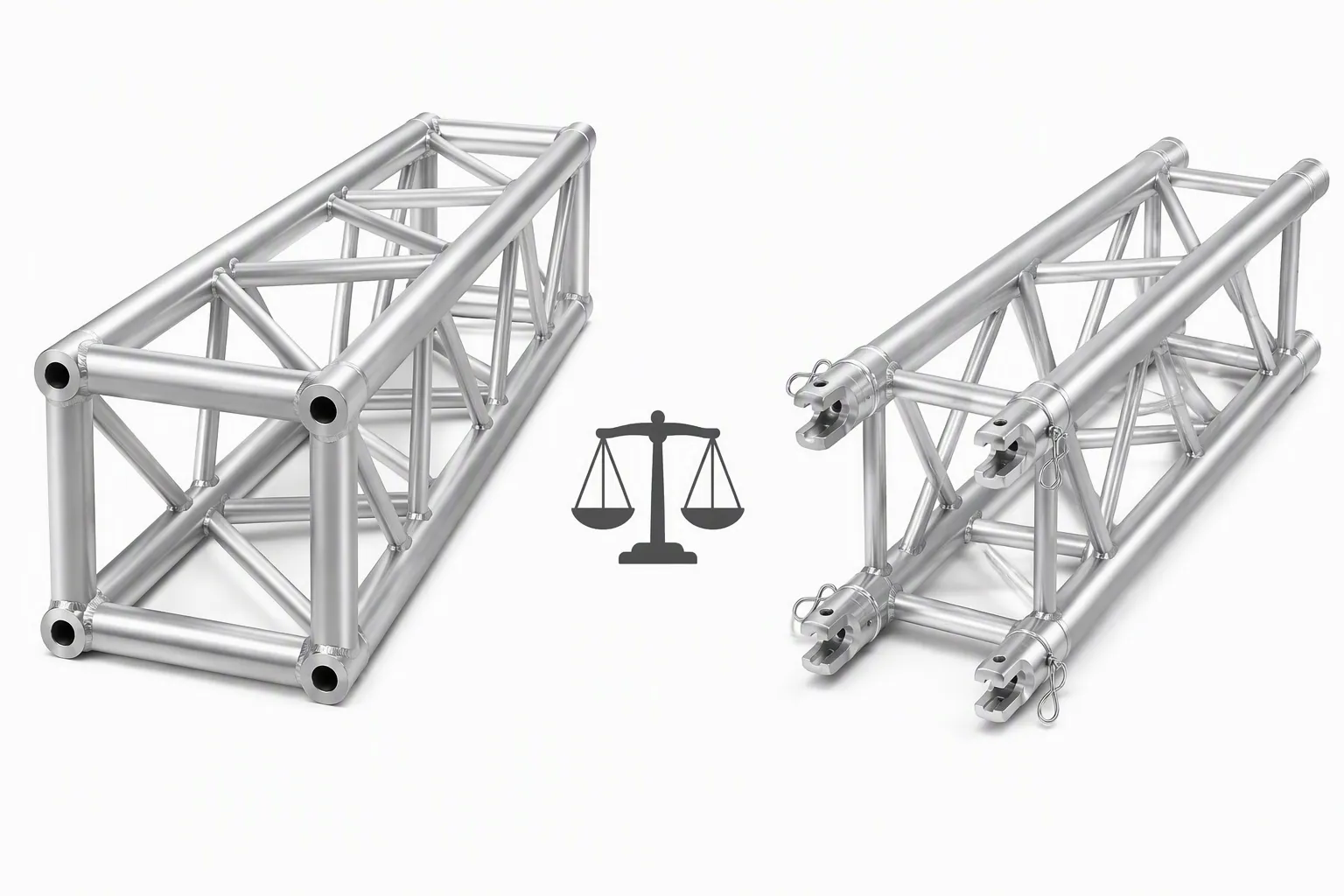
An aluminum box truss is a welded, square-profile structure built for rigging and stage setups. Its four-chord design distributes weight across multiple tubes, which gives it exceptional strength and stability. The square profile also provides multidirectional support, making it well suited for heavy loads such as lighting systems, LED screens, audio equipment, and large-format displays.
Manufacturers typically build these trusses from 6061-T6 or 6082-T6 aluminum alloys. A standard 500x500mm box truss uses 50x3mm main tubes and 30x2mm brace tubes. Available lengths include 0.5m, 1m, 2m, 3m, and 4m segments. You must always consult certified load charts for your specific span and support configuration. Never assume capacity.
One critical rule applies here: loading figures assume you apply the load evenly to both lower tubes. If you load only a single tube individually, the overall load-bearing characteristics can be reduced.
Pros and Cons
Aluminum box truss offers a key advantage over steel: predictable deflection. It gives you a visible warning before reaching its limit. Steel truss, by contrast, can fail suddenly. The material is also lightweight, which makes transport efficient. Nine sticks of 3m 500mm box truss fit a 3-ton truck. By comparison, 200m of standard 3m triangular truss fits the same truck.
On the downside, box truss costs more than basic triangular options. It also weighs more per segment than spigot-style alternatives. GF-Truss offers aluminum box truss with high load ratings for demanding builds.
What Is Spigot Truss?
Design and Assembly
Spigot truss, also called conical truss, uses fork-end connections secured with pins. The system relies on a two-ended conical coupler. Each male end of the coupler fits into the female connector at the end of a truss section. You then join the two parts with a pin. An R-clip safeguards the pin against coming loose. During assembly, you use a truss hammer to knock the pin into position. Removing the pin disconnects the sections. This quick-lock system enables fast assembly and disassembly. Event crews favor spigot truss when speed matters.
Manufacturers produce fork ends from high-strength aluminum alloys. Common materials include 6005A-T6 aluminum and EN AW-6061 T6 aluminum. These alloys balance strength with low weight. Compare this to bolt truss, also called plated truss. Bolt truss uses bolted connections. Those connections reduce the chance of incorrect assembly. Less experienced crews find bolt truss more forgiving. However, spigot truss assembly takes much less time. You complete setup and teardown faster.
Pros and Cons
Spigot truss delivers clear advantages for temporary installations. You save hours during load-in and strike. The lightweight design simplifies handling. Transport and storage costs decrease. These benefits make spigot truss popular with rental companies and event crews.
The system has important limitations. Conical connections allow more assembly errors than bolted systems. An inexperienced worker might not seat the coupler fully. They might forget to install the R-clip. Proper training reduces these risks. You must also confirm the fork-end material matches your load requirements. Aluminum spigot truss works well for standard lighting and display setups. For heavy-duty rigging, verify all load ratings with your supplier. GF-Truss can guide you toward the right configuration for your specific application.
Aluminum Box Truss vs Spigot Truss Comparison
Strength, Weight, and Assembly Time
This aluminum box truss comparison starts with strength. Box truss wins on raw load capacity. Its four-chord square profile spreads weight across multiple tubes. Spigot truss handles lighter rigs well. A 10m x 8m outdoor stage carrying 250kg of lighting works perfectly with a 12-inch aluminum box truss using spigot connections rated for 300kg. That setup gives you a safe margin without overspending.
Weight favors spigot truss. Fork-end connections use less material than welded box sections. You move each segment faster and load trucks with less effort. Assembly time also favors spigot truss. Pins and R-clips lock sections in seconds. Box truss often requires more handling because of its bulk. Your crew completes a spigot build in a fraction of the time.
Cost and Common Applications
Cost depends on order volume. A factory-price spigot truss (model TC220, TFR brand, Guangdong, China) with TUV certification shows tiered pricing:
|
Order Quantity |
Price per Meter |
|---|---|
|
1–9 meters |
$150 |
|
10–19 meters |
$100 |
|
20 meters or more |
$50 |
A premium Aluminum Box Truss system lists a reference FOB price of US$39.00–119.00 per meter with a one-meter minimum order. That product uses 6061-T6 or 6082-T6 aluminum profiles and suits indoor and outdoor medium-sized event stages and backdrops. Notice the overlap. Box truss is not always the expensive option. Volume, alloy grade, and certification drive the final number.
Applications separate these two types clearly. Concerts, heavy stage setups, and permanent installations favor box truss. Trade shows, outdoor events, and rental fleets favor spigot truss. Neither bolt nor spigot truss is universally better. The ideal choice depends on your specific application. A touring concert needs load capacity. A weekend trade show needs speed. GF-Truss supplies both connection types, so you can match the truss to the job instead of forcing one type to fit every scenario.
Which Truss Fits Your Event?
Concerts and Heavy Stage Setups
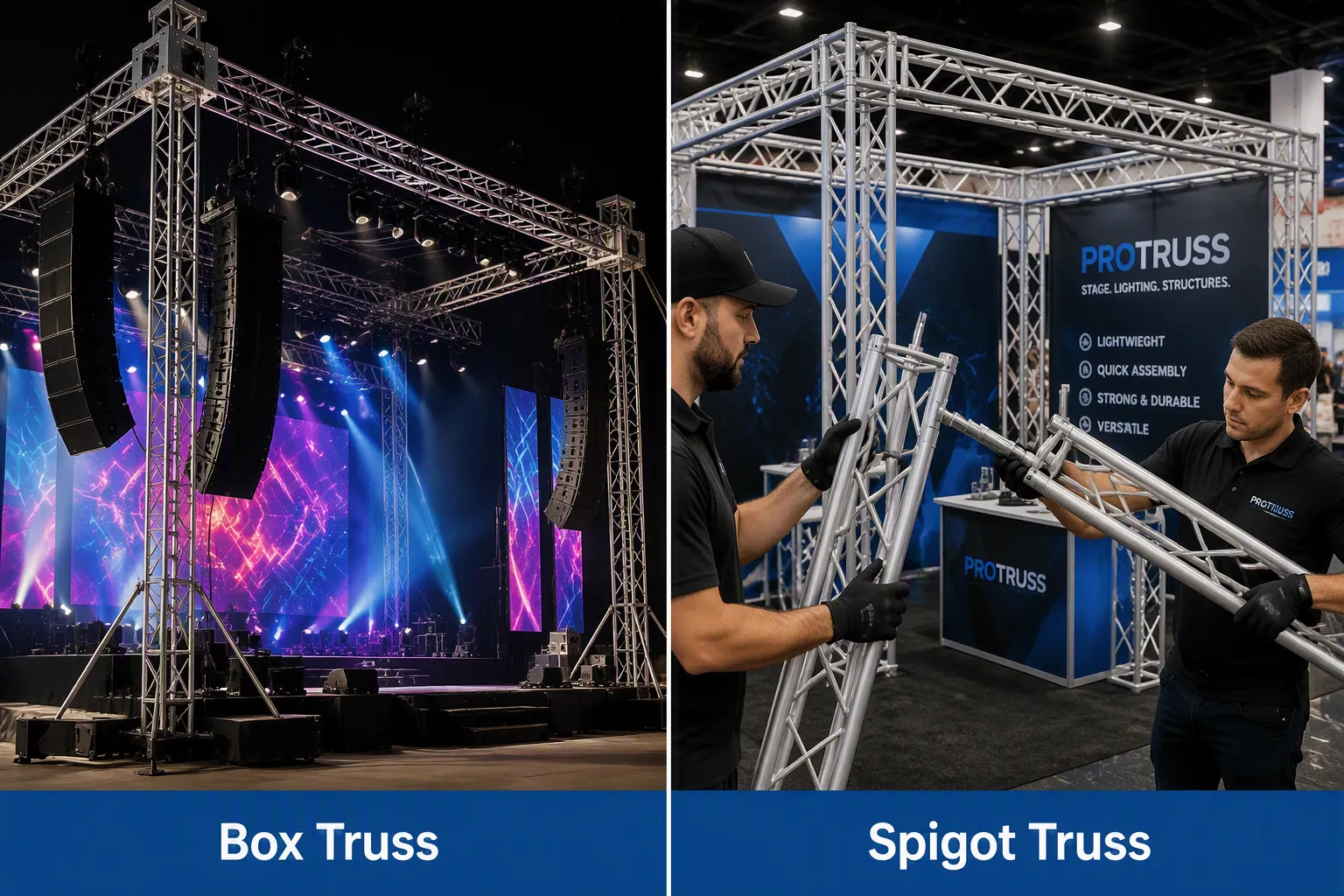
Concerts demand maximum load capacity and rock-solid stability. Aluminum Box Truss wins here. Its four-chord square profile distributes weight across multiple tubes, so you can hang heavy lighting rigs, LED walls, and audio arrays without worry. The square shape also provides multidirectional support, which keeps your structure stable under dynamic loads.
Outdoor music festivals follow the same logic. Rigging safety guidelines recommend truss types built for heavy loads and long spans. Conical truss offers simple assembly and added safety for heavy loads. Spigoted truss uses thick rigid aluminum tubes and suits severely heavy loads. Pre-rig truss provides enormous rigidity for long spans and massive roof or ground support. Plated truss works well for flying PA systems and general purposes. Touring truss carries light fixtures and multiple equipment with minimal weight.
You should match the truss to your specific load profile. A touring concert with a large roof system needs pre-rig or spigoted truss. A smaller stage with moderate lighting can use conical or plated truss. Always check certified load charts for your span and support configuration.
Trade Shows and Outdoor Events
Trade shows and outdoor events prioritize speed and portability. Spigot truss fits these scenarios best. Its pin-and-socket connection system lets your crew assemble and disassemble sections in seconds. You save hours during load-in and strike. The lightweight design also simplifies transport and storage.
Event planners typically weigh rigging requirements, load calculations, and assembly timeline when choosing between connection types. Box truss sections combine strength and manageable weight, supporting substantial equipment loads while remaining practical for setup crews without heavy machinery. They connect securely with bolt connections to maintain structural integrity and meet professional load ratings. Spigot truss enables faster assembly for productions prioritizing setup speed over the absolute maximum load capacity of bolt systems.
For trade show booths, box truss suits large-scale displays but proves less practical for smaller booths. Spigot truss assembles quickly but may offer less stability than bolt-connected systems. Square bolt small truss balances portability, strength, and ease of use. It provides a secure, wobble-free structure.
You must always verify load ratings, span, and connection type for safety and efficiency. A 10m x 8m outdoor stage carrying 250kg of lighting works well with a 12-inch aluminum box truss using spigot connections rated for 300kg. That setup gives you a safe margin without overspending. Never assume capacity. Consult certified load charts for every build.
Key Factors Before You Buy
Span Length and Budget
Span length directly shapes your truss choice. Longer spans demand greater load capacity and structural rigidity. Box truss handles these demands well because its four-chord design distributes weight across multiple tubes. Spigot truss works best for shorter spans and lighter rigs. You save money when you match the truss to your actual span instead of overbuilding.
Budget also plays a role. Aluminum truss costs more upfront, but you gain lightweight handling and a premium finish. Steel truss offers a cost-effective alternative with durable performance. Your total project budget must account for transport, labor, and assembly time. A cheaper truss that takes longer to install may cost more overall.
Crew Skill and Support
Your crew's experience level matters. Experienced crews assemble spigot truss quickly because pins and R-clips lock sections in seconds. Less experienced workers may struggle with proper coupler seating. Bolt truss reduces assembly errors because bolted connections leave little room for mistakes. Choose spigot truss when your team knows the system well. Choose bolt truss when you need extra safety margins for newer workers.
GF-Truss supports your selection process. The company supplies both connection types and can recommend the right truss for your project. Share your span, load, and timeline with their team. They will help you balance strength, speed, and cost.
Before you buy, confirm three things: certified load ratings for your span, the connection type your crew can handle, and the total budget including labor. These checks prevent costly mistakes and keep your build safe.
Pick Aluminum Box Truss for permanence and heavy loads. Pick spigot truss for portability and quick rigging. Match your truss to the load, timeline, and crew skill. Then contact GF-Truss for guidance on your next project.
FAQ
Can I mix box truss and spigot truss in one structure?
No. Mixing connection types creates weak points and unsafe joints. Use one system throughout your build. GF-Truss can advise on the right choice for your full structure.
How do I verify a truss load rating?
Request the manufacturer's certified load chart. Check the rating for your exact span and support spacing. Never rely on general capacity claims without documentation.
Which truss type lasts longer?
Both last for years with proper care. Aluminum resists corrosion well. Inspect fork ends and pins regularly for wear. Replace damaged connectors immediately.