
A truss failure can kill people. You must treat these ten standards as non-negotiable: engineering codes, certified materials, load ratings, welding standards, nondestructive testing, load calculations, assembly documentation, installation practices, inspection schedules, and traceability records. Compliance is a continuous obligation, not a one-time checkbox. Event truss safety depends on your daily discipline.
Key Takeaways
- Follow all ten safety standards every day to prevent truss failures and save lives.
- Treat compliance as an ongoing duty, not a one-time task.
- Use these standards to build a complete safety system from design to maintenance.
1. Follow Recognized Engineering Codes
Engineering codes give you the technical baseline for every truss you build. You cannot rely on intuition or past habits. Recognized codes define how a structure must behave under load, wind, and vibration.
- Which Codes Govern Event Truss Safety
Your designs must align with the governing structural codes in your market, such as the International Building Code and the Eurocode series, plus local venue regulations. These documents set requirements for spans, loading conditions, stability, connection methods, safety factors, and environmental exposure. GF-Truss builds its engineering framework around these recognized standards, so every product line starts from a documented code basis.
- How to Put Code Compliance Into Practice
Compliance starts before manufacturing. You must evaluate the full design envelope and then verify it through a licensed structural engineer. Follow this sequence:
1. Design the truss system with defined dimensions, load requirements, and equipment placement.
2. Engage a licensed structural engineer to review the design against local codes.
3. Adjust element placement, load distribution, or support structures based on engineer feedback.
4. Obtain the engineering stamp that certifies the design meets all safety requirements.
5. Submit stamped plans to local authorities and venues before the event date.
You must also master installation sequences, maintain the system through routine inspection, and apply standardized procedures on every project. Event truss safety depends on this discipline from design through maintenance.
2. Use Certified Structural Materials
Certified material gives you documented proof of strength, chemistry, and durability. You cannot accept steel or aluminum on trust alone. Every batch must carry a certificate that ties it to a recognized standard.
- What Certified Material Means for Event Truss Safety
A material certificate confirms the mill tested the steel or aluminum and that the results meet a published grade. The grade defines yield strength, tensile strength, and chemical composition. Event truss safety depends on these values matching your design assumptions. A weaker grade can fail well below the rated load.
| Standard | Grade | Primary Market | Truss Application |
|---|---|---|---|
| ASTM A36 | A36 | North America | Secondary members, gusset plates |
| ASTM A572 | Grade 50 | North America | Chord plates, web members |
| ASTM A500 | Grade C | North America | Cold-formed HSS members |
| EN 10025-2 | S275/S355 | Europe, ME, Africa | Chord and web members |
| EN 10219/10210 | S355J2H | Europe, ME, Africa | HSS truss members |
| AS/NZS 3678 | Grade 350 | Australia, Pacific | Plate-fabricated chords |
| AS/NZS 1163 | C350L0 | Australia, Pacific | Cold-formed RHS/CHS members |
| IS 2062 | E250/E350 | India, South Asia | All member types |
- Sourcing and Verifying Material Certificates
You must request mill test certificates with every order and check them against the purchase specification. Verify the heat number, grade, and mechanical properties before you release material to production. GF-Truss sources certified stock and keeps mill certificates on file for every batch, so each truss traces back to a verified heat. Store certificates with the job records and cross-reference them during final inspection.
3. Meet Load Rating Requirements
- Why Load Ratings Are the Backbone of Event Truss Safety
A load rating tells you exactly how much weight a truss can carry under defined conditions. This number is the backbone of event truss safety. Overloading can cause structural deformation, connection failure, or complete collapse. You must always keep applied loads below the maximum rated load and account for safety factors. Common estimation mistakes include ignoring span length, underestimating dynamic loads, using incorrect material data, and downsizing truss to cut cost. For outdoor setups, wind load is a major additional factor. Design and installation should be performed by qualified professionals following safety guidelines and regulations.
- Calculating and Publishing Accurate Load Tables
Load capacity varies with span length, truss size, material grade (such as 6061-T6 or 6082-T6 aluminum), and load type (static versus dynamic). Publish clear tables so installers can select the right product.
| Truss Size | Typical Load Capacity |
|---|---|
| 290 mm aluminum truss | 100–300 kg |
| 400 mm aluminum truss | 300–1000+ kg |
GF-Truss documents load testing for every product line and publishes load tables that reflect real span and load conditions. As a reference for safety-factor magnitudes, one industry test procedure loads a truss to dead load plus 2.0 times the design live load for 6 hours, or dead load plus 1.75 times the design live load for 12 hours, without rupture, fracture, or excessive yielding. These figures come from manufactured home roof trusses, not event truss systems, but they show the discipline your own testing must follow.
4. Apply Proper Welding Standards
- What Welding Codes Require of Truss Manufacturers
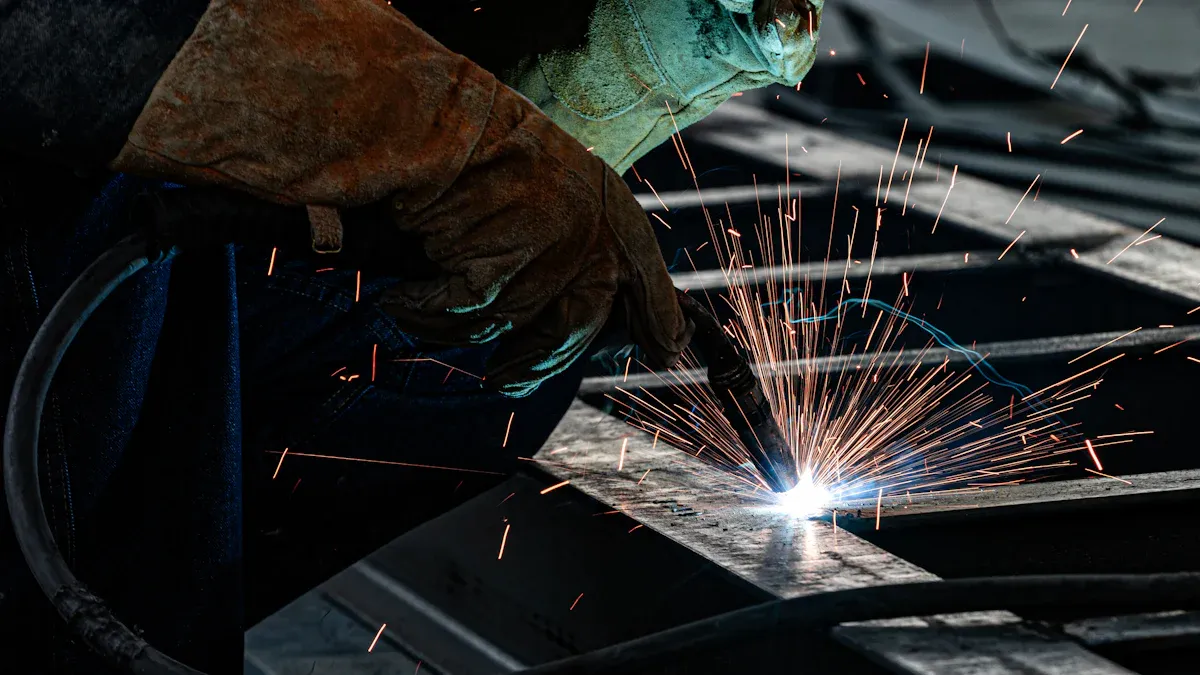
Welding codes define how you join metal so the joint performs as designed. You must work to a recognized welding standard for every truss you produce. The table below shows the codes that govern event truss welding across major markets.
| Standard | Scope / Relevance to Event Truss Welding |
|---|---|
| EN ISO 3834 | Quality requirements for fusion welding of metallic materials |
| EN ISO 9606-1 / 9606-2 | Qualification testing of welders for steels and aluminum alloys |
| EN 1090-2 / 1090-3 | Execution of steel and aluminum structures |
| AWS D1.1 | Structural welding code for steel |
| GB 50017-2017 | Design code for steel structures (China) |
| IS 816 / IS 9595 | Metal arc welding for general construction (India) |
These codes set requirements for weld procedure specifications, joint preparation, filler metal selection, preheat, and inspection levels. Event truss safety depends on your adherence to these rules at every joint.
- Qualifying Welders and Documenting Welds
You must qualify every welder through a recognized test before they touch production work. Record the welder's name, qualification code, test date, and approved positions. Pair each welder with a written weld procedure specification. Document every weld with a unique identifier, the welder's stamp, and inspection results. GF-Truss maintains welder qualification records and weld logs for each production batch, so every joint traces back to a certified operator and an approved procedure.
5. Perform Nondestructive Testing
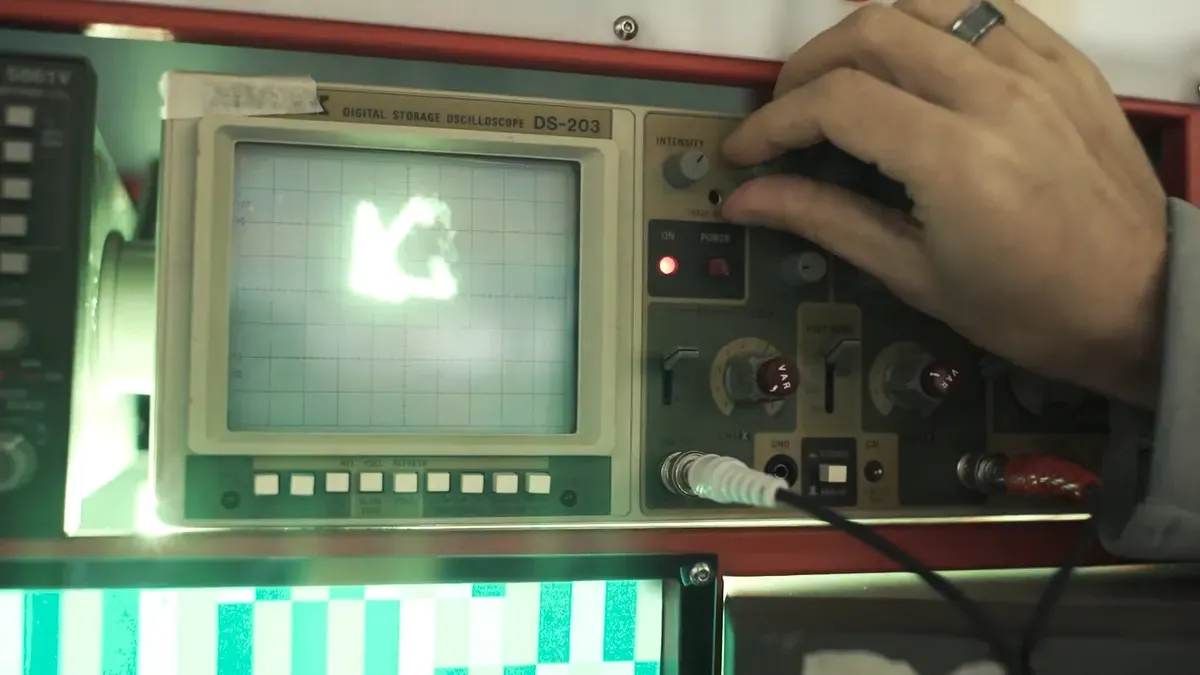
Visual inspection alone cannot prove a weld is sound. You must use nondestructive testing (NDT) to find internal defects before a truss leaves your facility. Hidden cracks, voids, and incomplete fusion can cause a failure under load. NDT gives you the evidence that every joint meets its design intent.
- Which NDT Methods Apply to Event Truss Safety
Each NDT method reveals a different class of defect. Select the method that matches the material and the joint type.
| NDT Method | Capabilities / Characteristics |
|---|---|
| Ground Penetrating Radar (GPR) | Detects internal anomalies such as voids, discontinuities, and inclusions, and locates them spatially; faster than point-by-point testing; allows in-situ testing; no coupling agent needed between antenna and surface; effective depth up to 80 cm (2 GHz dual-polarization antenna); interpretation requires experience to identify defect nature (air void, metal element, inclusion, deterioration, knot). |
| Ultrasonic Testing | Used in transmission mode to locate defects via signal propagation; accounts for material anisotropy (grain direction, pith location) when determining wave velocity; sensitive to joints with air voids (velocity drops sharply, e.g., from ~1782 m/s to ~1630 m/s, or more than twofold at bolted joints); damaged elements show longer time-of-flight and reduced velocity (e.g., 616.7–1149.4 m/s vs. 1627.9–1788.1 m/s for undamaged). |
| Moisture Meter | Provides quick, non-destructive measurement of moisture content in wood and other building materials (e.g., Tanel WIP-24). |
- Building NDT Into the Production Line
You should embed NDT into your production gateways, not bolt it on at the end. In-line ultrasonic and penetrant testing during the welding sequence gives real-time feedback and replaces the slower off-site lab model with its 7–10 day lead time. Dedicated NDT bays beside the fabrication lines enable immediate quality validation for steel beams, angle steel, channel steel, cold-formed profiles, and custom components. GF-Truss runs ultrasonic and radiographic testing at three key stages — after welding, after galvanizing, and before shipment — inside its ISO 9001-certified process. This structure eliminates rework cycles and protects event truss safety at every checkpoint.
6. Provide Clear Load Calculations
- What a Complete Load Calculation Must Include
A complete load calculation lists every force that acts on the truss. You must account for the equipment the truss carries and the environment around it. Start with these core loads:
- Lighting load
- Speaker load
- LED screen weight
- Wind load (critical for outdoor installations)
- Reference to safety standards and engineering constraints for structural safety verification
General truss analysis theory adds two more layers. You must account for dynamic amplification from moving loads, wind gusts, and seismic events. Impact factors of 1.25–1.40 raise design loads by 25–40%. You must also check multiple load combinations, such as dead load plus wind from four directions with and without ice accumulation. Wind loading on exposed trusses can reverse member forces, so you size each member for the maximum tension or compression across all combinations. These concepts supplement the event-specific load types above.
- Delivering Calculations That Installers Can Trust
Installers need numbers they can apply on site without guesswork. Present each calculation with the span, the load case, and the governing safety factor clearly stated. GF-Truss pairs every load table with documented test data, so installers see the basis behind each rating. Clear calculations protect event truss safety at the point of installation.
7. Include Complete Assembly Documentation
- What Assembly Documentation Must Cover
Your assembly documentation must give the crew everything they need to build the truss correctly. Cover the approved layout, the matching component inventory, the required tools, and the current manufacturer instructions. The crew must have this package before they start work.
All packages in truss and stage inventory are approved, with necessary documentation and industry certified load ratings.
Documentation must also tie the build to the correct load data. The crew should check the manufacturer's load documentation for the exact system, span, configuration, supports, and load arrangement. A chart for a different span cannot verify a specific build. If the proposed arrangement is not clearly covered, work should not proceed on an estimated capacity. Qualified technical review is required instead.
- Keeping Instructions Current and Accessible
Instructions lose value when they are outdated or locked away. Keep the manual accessible throughout the work, not just at the start. Update documents whenever a design, connector, or load rating changes. Remove superseded versions from the site so crews cannot follow them by mistake.
Train crews to stop when something is wrong. Stop assembly if a part is damaged, hardware is missing, the structure moves unexpectedly, or instructions are unclear. Keep people clear and do not improvise a repair. Pause and obtain correct documentation if the manual is missing or the layout is not clearly covered. This discipline protects event truss safety at every stage.
8. Enforce Correct Installation Practices
- Installation Rules That Protect Event Truss Safety
You must control how crews rig, hang, and secure every truss. Follow these rules on every build:
1. Rig the truss with rated hardware, distribute weight evenly, and stay within the published load capacity.
2. Inspect welds, bolts, and connection points for wear before use.
3. Require personal protective equipment and fall protection at height.
4. Train every crew member on local and national safety guidelines.
5. Clean, lubricate, and tighten hardware on a regular schedule.
Secondary retention is not optional. Each fixture needs its own independent safety cable, rated at a minimum breaking strength of at least 10 times the fixture weight. Anchor the cable to a main truss chord, never to a diagonal brace, cable bundle, or sprinkler line. Keep slack minimal and close every snap hook with a screw lock.
Primary suspension hardware carries the show, while the safety cable exists for the bad day. Combine certified, load-rated primary gear with dedicated secondary retention so a loose shackle never becomes a falling object over the audience.
- Supporting Installers With Training and Checklists
Competence and certification are different things. A competent person identifies hazards and corrects them on the spot. A qualified person solves complex problems through documented training or experience. Assemble truss under a competent person's supervision, and confirm whether the venue requires a certified rigger.
Give crews a pre-event checklist. Verify no deformation, cracks, or damaged welds. Confirm all pins, bolts, and clips are installed. Check that suspended loads stay within capacity. Inspect hoists, slings, and rigging hardware. Secure lighting with secondary cables. Confirm the structure is level and stabilized. Clear unauthorized people from the lifting zone. Review emergency procedures before doors open.
9. Establish Inspection and Maintenance Schedules
Inspection protects event truss safety long after the truss leaves your facility. You must set fixed inspection intervals and document every check.
- How Often Truss Must Be Inspected
Build inspection into a repeating cycle. The table below shows the stages you must cover.
| Inspection Stage | Recommended Actions |
|---|---|
| Before Every Event | Inspect welds, connectors, pins, deformation, corrosion, and missing components |
| During Installation | Verify correct assembly, torque, alignment, and load distribution |
| After Every Event | Clean the truss, check for transportation damage, and record defects |
| Annual Inspection | Perform a complete structural inspection and replace worn components as needed |
Hire a professional inspection agency for a full structural review every one to two years. That review should include ultrasonic and radiographic testing plus mechanical property testing.
- What a Maintenance Program Should Include
Your maintenance program must cover every critical component. Check these items on a set schedule:
- Welds — inspect for cracks, breaks, or metal fatigue
- Bolts — verify they are tightly secured and free of rust or wear
- Joints — check for unexpected or unsafe movement
- Plates — inspect for warping or corrosion
- Pins and fasteners — confirm they are secure and functioning properly
- Maintenance schedule — include periodic cleaning, detailed inspections, and lubrication of moving parts, with set intervals and documentation of all activities
- Cleaning — use non-corrosive, truss-safe agents; avoid high-pressure washing; remove dust and debris regularly and clean spills promptly
Secure all connections before lifting or loading. Tighten steel bolts with a socket wrench without overtightening, and fasten fork and clevis pins with hard clips. Maintain a continuous diagonal pattern when joining multiple truss pieces. Rig only at panel points, and avoid seat clamps on aluminum trusses.
10. Maintain Traceability and Certification Records
- Why Traceability Matters for Event Truss Safety
Traceability lets you follow every component from the mill to the stage. Each truss section and piece of lifting equipment must carry a unique identification or traceable marking. You must record inspection history and quarantine damaged components without delay. Replacement parts must match the original system exactly. Vague claims like "strict quality control" prove nothing unless you can show what you inspect, when you inspect it, and what happens on failure. Mixing truss brands, connectors, pins, couplers, shackles, or hoist accessories introduces real risk even when parts look interchangeable. You need written compatibility confirmation before you combine them.
| Aspect | Evidence |
|---|---|
| Why traceability matters | Every safety cable and fitting must be load-rated and traceable to a professional manufacturer; hardware must carry visible markings (WLL/SWL). |
| Consequence of poor traceability | Hardware lacking readable manufacturer data must be treated as unusable overhead — "mystery hardware" cannot be part of the load path. |
| Why traceability matters | Each fixture needs its own independent safety cable (no daisy-chaining), which keeps inspection and traceability manageable. |
| Consequence of poor traceability | Shared or ambiguous rigging makes inspection and traceability harder when something goes wrong, risking chain-reaction drops. |
| Why traceability matters | Documented periodic inspections should link any issues to specific hardware batches. |
| Consequence of poor traceability | Without batch linkage, defects such as kinks, broken wires, or corrosion cannot be traced back to affected equipment. |
- Setting Up a Record-Keeping System
Build a record system that links every truss to its material certificates, weld logs, NDT reports, and load test data. Assign a unique serial number to each truss and log it at every inspection. GF-Truss maintains full traceability records for every batch, so you can pull the complete history of any component on demand. This system protects event truss safety from design through maintenance.
These ten standards form one complete safety system, not isolated steps. You bear ultimate responsibility for event truss safety from design through maintenance. GF-Truss reflects these standards through certified materials, documented load testing, and full traceability records. Audit your current practices against this list and close every gap you find.
FAQ
Which safety standard matters most for event truss manufacturers?
No single standard stands above the rest. Engineering codes, certified materials, and load ratings form the foundation. Skip one, and the entire safety system weakens. GF-Truss treats all ten standards as equally mandatory.
How often should you inspect event truss?
Inspect before every event, during installation, and after every event. Schedule a full structural review every one to two years with a professional agency. Document every check and quarantine damaged components immediately.
What records must you keep for traceability?
Keep mill certificates, weld logs, NDT reports, and load test data for every truss. Assign a unique serial number and log it at each inspection. GF-Truss maintains complete batch records on demand.